


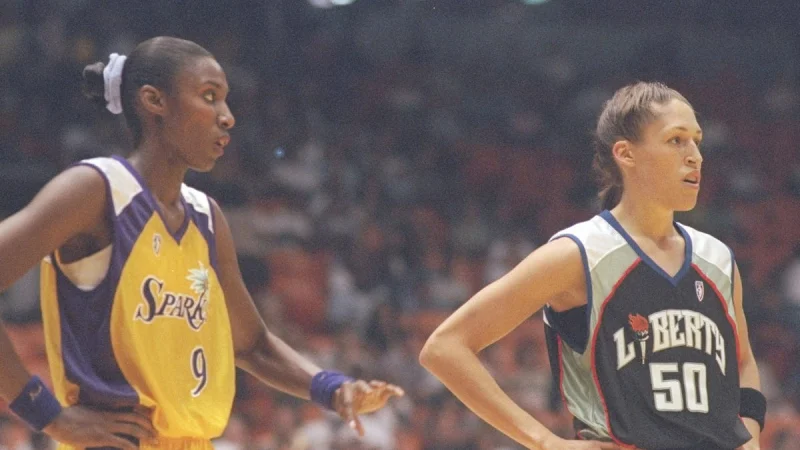
The WNBA is turning 30, and the league that launched in 1997 is no longer fighting to exist. It is now a global fixture in women’s sports, powered by record attendance, rising salaries and the kind of media attention that once seemed out of reach.
That shift is why the anniversary feels bigger than a ceremonial date. A’ja Wilson said it was “surreal” to see herself become such a large part of the league, and she framed her place in it as a duty to keep laying the path for the next generation, the same path that was laid down for her.
The numbers behind the change are hard to miss. The WNBA is celebrating three decades after beginning in survival mode, yet it now has the scale to pull in fans who are following not just established stars but the pipeline around them. The 2024 WNBA Draft class helped fuel that interest, while players such as Wilson, Breanna Stewart, Caitlin Clark and Paige Bueckers have pushed the game to new heights. Clark also set the all-time NCAA scoring record for men and women, which helped widen the audience already watching the women’s game.

For the league’s first generation, the milestone is personal. Cynthia Cooper said she knew early on that the league needed a solid foundation so little girls could dream of playing pro basketball, and she pointed to the growth around A’ja Wilson, Caitlin Clark and Angel Reese, along with new talent such as Lauren Betts and Azzi Fudd. She added that seeing the league flourish, along with the new CBA agreement, left her “over the moon.”
The friction in the story is plain enough. The WNBA is thriving now, but it did not start that way, and that is what gives the anniversary its weight. Sheryl Swoopes, Cynthia Cooper, Rebecca Lobo and Lisa Leslie helped legitimize the league in its earliest years, while Diana Taurasi, Maya Moore, Sue Bird and Tamika Catchings later raised the standard of excellence. Cooper was there from the start, helping the Houston Comets win the first four league titles, and now she is looking at a league that is far larger than the one she helped carry.
That history came into focus again in Game 3 of the 2025 WNBA Finals, when Las Vegas was tied with Phoenix at 88 with five seconds left at Mortgage Matchup Center and Wilson hit a fadeaway jumper over Alyssa Thomas and DeWanna Bonner in a moment that summed up the league’s current reach. Phoenix needed a stop in regulation to avoid falling into a 3-0 series hole, and Las Vegas was five seconds from overtime before Wilson’s shot changed the game.
What comes next is bigger than a celebration. Cooper said she is excited not just for 30 years of the WNBA, but for the next 30, and the league’s next phase will be judged by whether it can keep converting this attention into the money, visibility and stability that early players spent a generation trying to make possible.
