James D. Durso says the era when Washington could debate energy policy mainly through economics, climate change and domestic politics is over. In his view, the United States has moved into a period where energy security is part of national security and military readiness, and that makes Small Modular Reactors a top national priority.
The timing matters because the country is not facing a distant power problem. It is facing rising demand now, while the grid is already at capacity and exposed to cyberattacks, physical sabotage, transmission bottlenecks and extreme weather. That mix has turned electricity from a utility issue into a strategic one, especially as defense installations, logistics hubs and command and control infrastructure all depend on uninterrupted power.
Durso, who was Chief Executive Officer of AKM from 2013 to 2015, argues that the strategic case for SMRs is rooted in what the United States is trying to protect. Competition with China now runs through industrial capacity, technological dominance, AI, semiconductor manufacturing and defense production, all of which depend on abundant and reliable electric power. He says America’s future military superiority rests in part on whether it can produce enough resilient, secure baseload electricity.

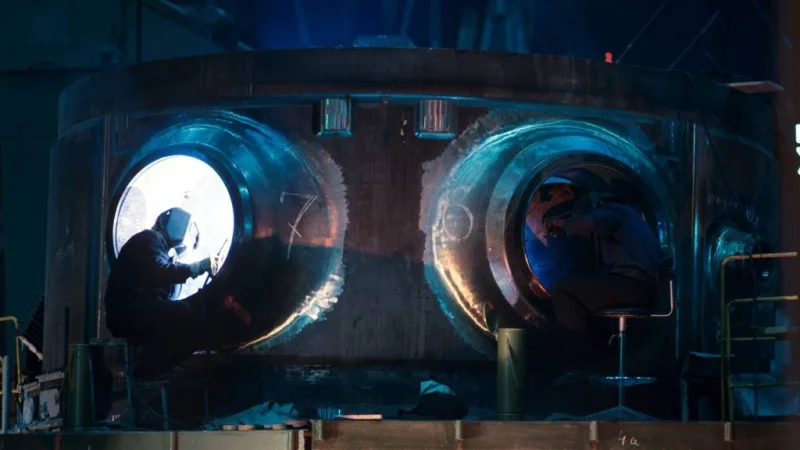
That is where SMRs enter the picture. They are smaller, factory manufactured and more flexible to deploy than traditional large-scale nuclear plants. In practical terms, that means they can be built to serve specific industrial facilities, defense installations, AI infrastructure and remote or constrained environments where grid reliability is a concern. The appeal is not abstract. The nation needs dependable, 24/7 baseload power that can keep critical infrastructure running under all conditions, including natural disasters, geopolitical crises and military conflicts.
The strongest case for them is behind the meter. Placing reactors next to mission-critical facilities instead of depending only on long-distance transmission would give defense installations, industrial corridors, AI campuses and manufacturing hubs dedicated power that does not have to compete with civilian demand. It would also reduce exposure to the kind of grid failures that can follow cyberattacks, sabotage or simple instability elsewhere on the system.
But the argument is not closed. Fuel security remains an unresolved issue, even as SMRs are promoted as one of the few realistic solutions that can be deployed on a shorter timeline than legacy power systems. That matters because a reactor strategy is only as strong as the supply chain that keeps it running. The promise is resilient power; the question is whether the fuel side can be secured with the same urgency as the hardware.
For now, the policy direction is clear even if the deployment path is not. The United States is being told to treat advanced nuclear power not as a niche energy option, but as infrastructure tied directly to military readiness, digital competition and industrial strength. What remains to be solved is whether the fuel system behind SMRs can be made as secure as the electricity they are meant to deliver.