


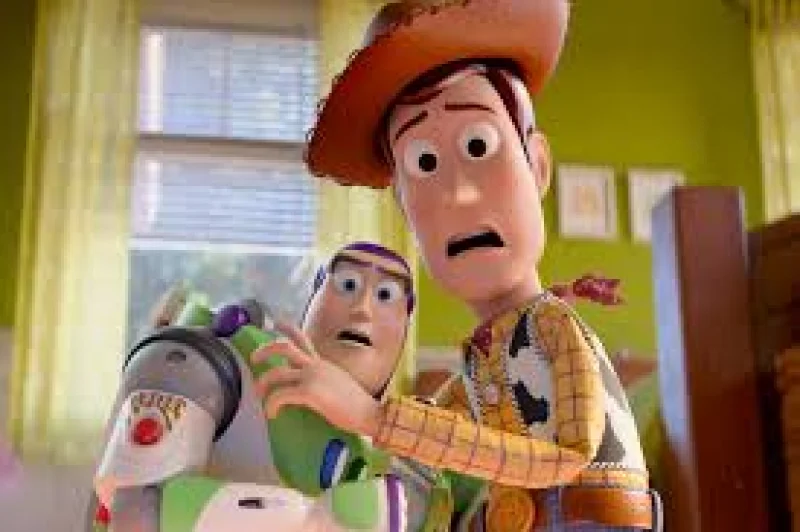
Tom Hanks and Tim Allen are leaving the future of Toy Story 6 in Pixar’s hands, saying the series should continue only if the next movie earns its place. Hanks said a sequel dragged out for commerce would not be worthy of Toy Story, while Allen said Pixar would not make a film if it was not good.
That question is landing now because Pixar has brought the franchise back to the screen with Toy Story 5, a film that sends Bonnie, now 8, toward a Lilypad tablet that makes her start ignoring her toys. In the story, Jessie tries to pull her back toward a real-life friend, another sign that the series is once again using the child at the center of the story to measure what happens when the toys lose attention.
The conversation also matters because Toy Story has never behaved like a franchise that ends cleanly. Since 1995, when it arrived as the first feature-length computer-animated film in history, the series has kept finding a new handoff point: Andy’s toys to Bonnie, Woody becoming a lost toy with Bo Peep in Toy Story 4, and now Bonnie’s shift from play to screen time. Pixar marked its 40th anniversary in February, which only sharpened the question of whether the company sees another chapter after Toy Story 5 or whether this is the last turn for the toys.

Hanks tried to narrow that question to one rule: if there is another film, it should not be numbered as a routine sequel at all, but treated as the next Toy Story. That framing leaves room for continuation without promising it. Tim Allen backed the same idea from the other side, saying Pixar would not move ahead just to keep the machine running. The message from both voices is simple: the franchise can keep going, but only if the story justifies the trip.
Andrew Stanton is more open-ended. He said he can imagine anything if it is done well, and argued that the movies work because time is allowed to pass. For him, that means the series could keep tracking the lives of the children who own the toys, because every childhood and every home changes the toys’ world. He said there was never a map beyond handing the toys from Andy to Bonnie, and described the structure as one kid’s arc closing before another kid’s arc begins, with Bonnie in that second turn right now.
That is where the friction sits. Hanks and Allen are warning against stretching the series for money, while Stanton sees more stories inside the same premise if Pixar keeps following what feels natural. The new film’s technology angle shows how the franchise can still find a fresh threat without abandoning its core idea. Whether Pixar decides Toy Story 6 is worth making will come down to the same test the stars laid out: not whether another sequel can be sold, but whether it can still feel like Toy Story.
