


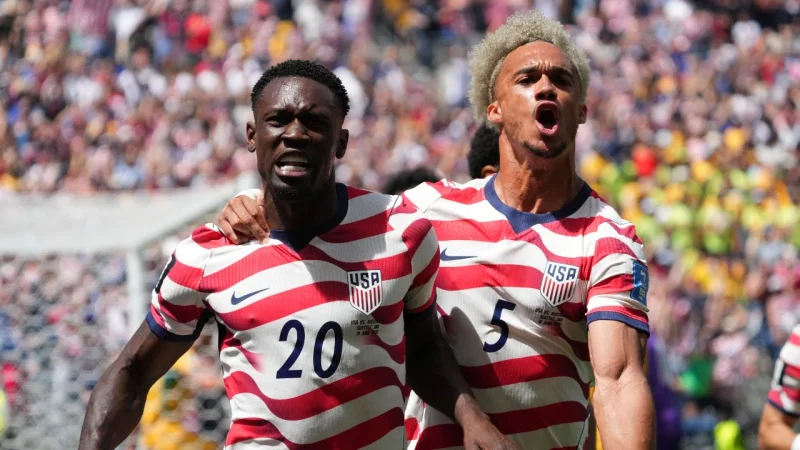
Haiti is back on the World Cup stage for the first time since 1974, and the return has come with a rare mix of joy, disbelief and urgency. Les Grenadiers sealed their place through CONCACAF World Cup qualifiers after Louicius Deedson scored the winning goal in November, sending a team long forced to operate away from home into football’s biggest showcase.
That matters now because the next stop is already set: Haiti’s first game against Scotland is scheduled at the New England Patriots’ stadium in Foxborough, Massachusetts. For a country whose team had not qualified for the World Cup since 1974, the date turns a long absence into a present-tense event, one that has pushed Haitians in the diaspora to gather around the squad as if it were a national reunion.
The number behind the emotion is stark. Haiti had not played on Haitian soil since 2021, and the Haitian Football Federation appointed Sébastian Migné as coach in 2024 while he was managing the team over the phone. The setup says as much about the country’s sports reality as the qualification does about its football, with the squad reduced to meeting on fields in Curaçao and preparing for a World Cup run without a home ground.

That distance has not stopped support from building around them. Pitit Manman Mari devoted seven days and seven nights of YouTube and radio broadcasts to fortifying the team before the Cup, while Frantzy Petit-Homme asked God to give the players the capacity to read the game before it develops. Michaël Brun planned the Bayo Haitian concert series in Boston on the eve of Haiti’s first game against Scotland, adding music to the surge of attention now following Les Grenadiers.
Wilkline Brutus put the mood in broader terms, saying Haitians across industries were experiencing an undeniable renaissance, with the kind of humanization and mainstream visibility that was not always afforded to them. The timing gives that idea real weight: after the killing of Jovenel Moïse, the already fragile government order was described as having been extinguished, yet the team has become a public symbol sturdy enough to travel across culture, faith and diaspora networks even while it is coached from afar.
That is the contradiction inside Haiti’s World Cup return. It is being celebrated as a unifying national moment, but it has arrived after years of displacement, remote management and no match on Haitian soil since 2021. What happens in Foxborough will matter, but the deeper test is whether this team can turn a distant qualification into something that lasts once the noise around the first match fades.
