


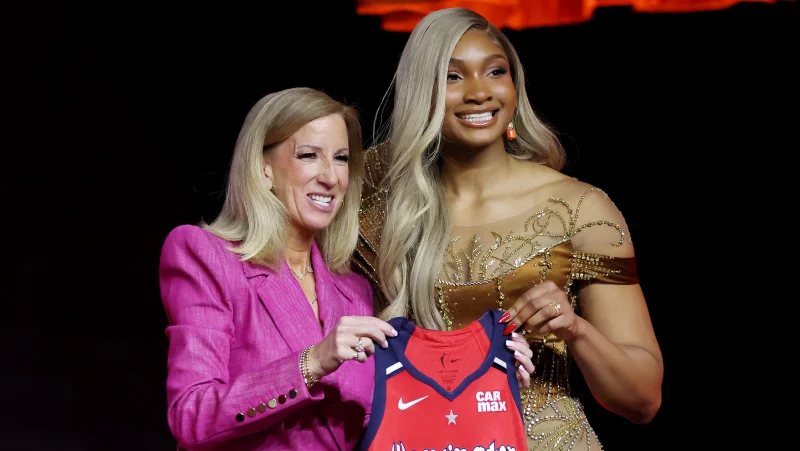
Andscape spoke with WNBA players of African descent about a choice that follows them from introductions to rosters: whether to use the full name their families gave them or a shortened version that travels more easily in basketball. For Okikiola “Kiki” Iriafen, Tèmítọ́pẹ́ “Tèmí” Fágbénlé and others, the decision is not cosmetic. It sits at the intersection of identity, pronunciation and how much of a heritage a player wants the public to hear in a packed arena.
The conversation lands now because the names are part of how these players are seen every time they are announced, written about or discussed by fans. Nneka Ogwumike said a person’s full name acts as an affirmation in Nigerian culture, and she identified her own as Nnemkadi Chinwe Ogwumike. She said Nnemkadi means “mother supreme,” Chinwe means “God gives,” and Ogwumike means “warrior,” a reminder that the name itself carries meaning before a game even starts.
Iriafen’s full name also carries that weight. Okikiola means “famous wealth” in Yoruba, and she said her parents were deliberate about the names they chose for her and her siblings, wanting names that would come to fruition. She said her father wanted his first child to be Okikiola no matter the child’s sex, a detail that turns a nickname into something more personal: Kiki is not a rejection of the name, but a version of it that fits the pro game. For readers who have seen her name attached to WNBA coverage, that may be the same player who has appeared in headlines about a Washington Mystics injury report on June 17 and a Sky Vs Mystics betting line tied to her double-double prop, proof that the shorter version is the one most fans meet first.
Fágbénlé puts the trade-off in sharper relief. She said she is Nigerian of Yoruba origin and grew up in England, where people could not pronounce Tèmítọ́pẹ́ properly. That pushed her toward Tèmi, the form she said was easier for people to say. Even now, she has considered going back to her full name on basketball rosters, but she does not want to hear it butchered in front of thousands of people in stadiums. Hearing it said incorrectly, she said, takes something out of her. The short version, she added, is mainly for her own preservation.
That does not mean the longer name disappears from who she is. Fágbénlé said she knows her roots, her history and her connection to Nigeria, and that she is thankful to be able to call Nigeria home. She said Nigerian success across many parts of life makes her proud to be part of that group, and she described Nigerians as smart, athletic, artistic and creative. The point is not that shortened names erase heritage. It is that they sometimes help players carry it into places that are not ready to say it correctly.
That is the friction running through this conversation, and it is why the choice feels larger than a roster entry. Several WNBA players with African-origin names have shortened their first names in pro careers for convenience, accessibility, pride or preservation. But the same players are also making clear that the family meaning remains intact. The unresolved question is not whether the full names matter. It is how often basketball culture will learn to say them well enough that players like Iriafen and Fágbénlé no longer have to choose between being recognized and being heard.
