


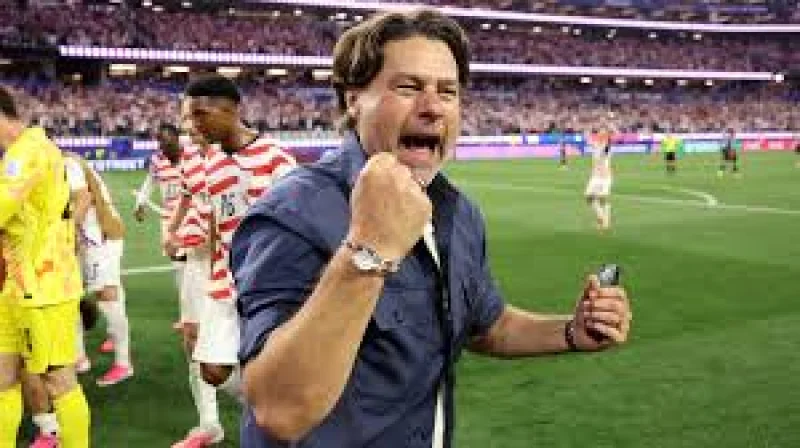
U.S. Soccer got the coach it wanted for the 2026 World Cup, but only by assembling a deal that would pay Mauricio Pochettino several million dollars a year and leaning on outside money to make it work. The federation’s new USA soccer coach was not just a sporting choice. He was a financial one.
That matters now because the tournament begins Thursday and U.S. Soccer has spent the past year trying to show it can match the scale of the moment. After the team crashed out of Copa América in June and July of 2024, some fans chanted for Gregg Berhalter’s firing at Arrowhead Stadium in Kansas City, and the federation moved on quickly. It fired Berhalter, then advanced in talks with Pochettino after he parted ways with Chelsea.
The numbers explain why the hire drew so much attention. Berhalter made around $1.7 million a year, including bonuses. Bob Bradley was paid less than $1 million per year in the late 2000s, while Jürgen Klinsmann eventually cleared more than $3 million by the end of his second contract. Pochettino landed above that old ceiling, with a package described as several million dollars annually. For a federation that has long operated without the kind of budget that routinely pulls elite coaches across borders, the deal marked a break from the past.
Cindy Parlow Cone said the move “absolutely” would not have happened without the outside backing unless Pochettino was willing to work for much less. U.S. Soccer said the deal was supported in significant part by a philanthropic leadership gift from Kenneth C. Griffin, with additional support from Scott Goodwin and several commercial partners. JT Batson said the search began with “a list of who we thought were the world’s best coaches,” and Jürgen Klopp was among those approached in 2024. That is the tell here: U.S. Soccer did not settle for a local fix or a safe reset. It reached for a global name and paid like a federation that knew the 2026 World Cup was too close to be cautious.
The question now is less whether the federation got ambition and more whether the investment buys enough time. Pochettino’s first 20 months in charge have been rocky, and he has spoken of identifying problems, destroying what needed to be destroyed and building again from the ground up. For U.S. Soccer, the wager is simple: a world-class coach, funded in unusual fashion, must start looking like a world-class solution before the home World Cup opens.
