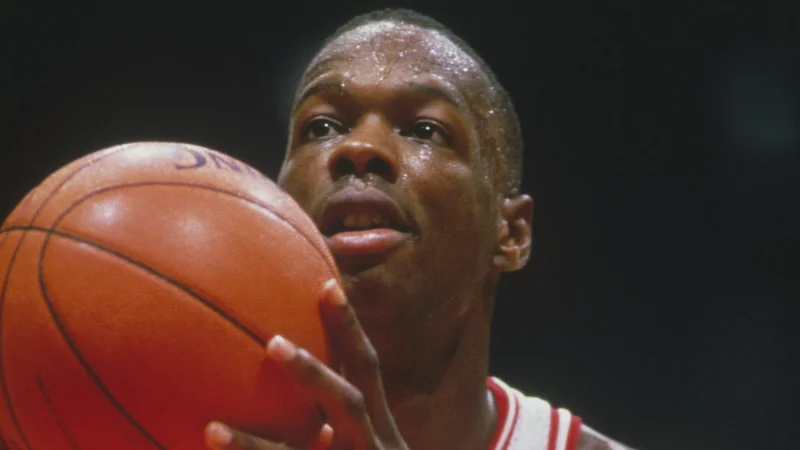
Forty years after Len Bias died, the memory that still pulls people back to him is not just the way his life ended. It is the force he carried before that night in 1986, when the former Maryland star was supposed to move on to the Boston Celtics and instead became one of basketball’s most haunting names.
That is why his name keeps surfacing now. Bias was the No. 2 pick in the 1986 NBA draft, a player from Landover, Maryland, whose rise at the University of Maryland had already made him a local star. But the search for him four decades later is really a search for the man behind the warning label, and for what was lost when his future collapsed into a fatal cocaine overdose.
Dr. Imani Perry put that loss plainly: “His life and gift have been reduced to cocaine and squandered opportunity instead of brilliance and charisma,” she said. That line captures the split in how Bias is remembered. One version is all unfinished possibility. The other is the one people who knew the atmosphere around him still reach for: a magnetic, generous presence who did not fit neatly into the tragedy that later defined him.
Scott Van Pelt described that version in a detail small enough to feel true. He said Bias would acknowledge him on campus with a dap or a “wassup,” and that he called him “Leonard” because that was what Lefty Driesell called him. Van Pelt also said, “He’s like the fish story that’s real,” a line that lands because it suggests something larger than highlight reels: a young man whose charisma outlived his career by decades.

That balance matters because Bias has long been turned into a symbol larger than the person. His death in Washington Hall, on what had been a celebratory night, became a cautionary tale, a shorthand for wasted potential, and part of a broader national story about drugs, race and basketball. Even the old battles with Michael Jordan at the University of North Carolina survive now in grainy footage passed around on YouTube, another reminder of how much the game believed he could become.
There was also a private side to him that sits awkwardly beside the public myth. Bias said, “I believe in God,” and “I owe my life to Him.” Those words do not undo what happened in 1986, but they do widen the frame. They suggest a player thinking about purpose, gratitude and faith, not only fame and pressure.
Forty years on, the unresolved question is not whether Len Bias mattered. It is whether basketball has ever fully made room for who he was before it made him a symbol. The answer may be no, and that is why the anniversary still stings.
For readers coming back to him today, the hard truth is that the lost career will always be part of the story. But so will the smile, the dap, the nickname, and the sense that the game saw only the beginning of what Bias might have become.