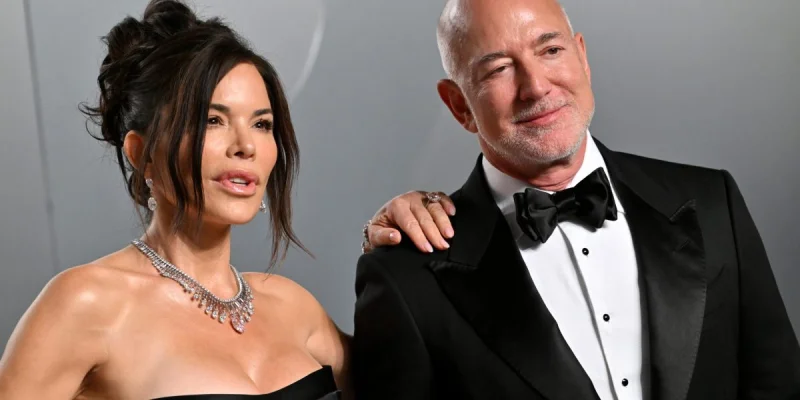
Lauren Sánchez Bezos has become the public face of the Bezos Earth Fund’s next spending push, announcing a series of grants this year as the fund works through Jeff Bezos’s $10 billion climate pledge before the 2030 deadline. In September, she unveiled $37.5 million for marine protection across 12 Pacific Island nations and territories. In October, she followed with $30 million in Phase II awards for the AI Grand Challenge for Climate and Nature. In December, she announced $102.5 million for organizations fighting homelessness across the U.S.
That burst of announcements matters because the money is still only partly out the door. Five years after Bezos made the 2020 commitment, the fund has deployed roughly $2.4 billion and still has about $7 billion left to distribute before the end of the decade. For readers following the Bezos Earth Fund now, the question is not whether it is still spending. It is how quickly and where the rest will go.

Sánchez Bezos, who is vice chair of the fund and married Bezos last summer, has made herself unusually visible in the role. The ocean grants were folded into a $100 million commitment to ocean conservation. The AI awards sit inside a program that commits up to $100 million to AI-driven environmental solutions. The homelessness money added to a larger Day 1 Families Fund record that has already topped $850 million across all 50 states, Washington, D.C., Puerto Rico and Guam.
The pattern shows a fund spreading its bets across oceans, AI, housing, food systems, wildlife and climate science while a single deadline looms over all of it. Its portfolio already includes $1 billion for food and agriculture systems, $100 million to the World Wildlife Fund for nature-based climate solutions, $110 million for habitat restoration and climate science, a $4.8 million partnership with the Earthshot Prize for 48 climate innovation projects, and a $3.5 million grant announced in February to speed nuclear energy deployment. In July 2025, Bezos also tapped former Amazon Alexa division head Tom Taylor to replace Andrew Steer as chief executive, a move that signaled a new phase in how the fund is managed.
What remains unresolved is the pace. If the Bezos Earth Fund is to meet the 2030 mark, the remaining $7 billion has to move much faster than the first five years did. Sánchez Bezos has shown she can make the grant announcements, but the larger test is whether the fund can turn a long promise into a full commitment on schedule.