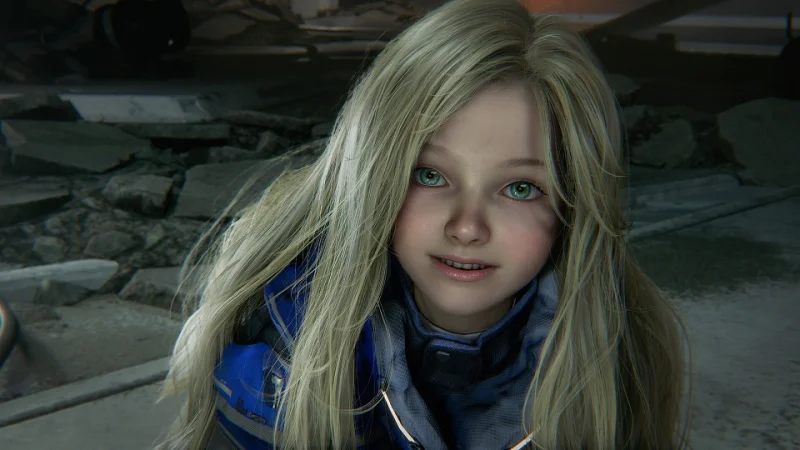
Capcom developers said on June 18 that Pragmata had a women-led internal check nicknamed the “Diana Police,” a small group that watched how Diana came across and pushed back whenever she started to feel too polished, too precious or too much like a character built to be adored on cue. The team said its job was simple: keep her cuteness balanced.
The timing helps explain why the remarks landed now. Pragmata launched on April 17 and sold 2 million copies in less than three weeks, so the June 18 commemorative YouTube livestream arrived while attention on the game was still high. For readers searching Capcom Pragmata development Diana Police today, the appeal is not only that the game is moving well, but that Capcom chose to talk about the strange, specific way it shaped one of its most talked-about characters.
Naoto Oyama described the group as a “Diana Police” that checked Diana’s character expression. Its goal was not to sand her down into something flat. It was to keep her natural childlike innocence from becoming so contrived that it might turn annoying. That balance also reached the performance work, with the group checking voice acting direction and the instructions given to the motion capture actors.

Cho Yonghee said most members of that review group were women, and the reason was bluntly practical. He said women were likelier to catch the “cunning” kind of cuteness in a female character, while men might react with little more than, “What’s the difference? (laughs)” That helps explain why the process did not rely on instinct alone. It was a repeated internal read on where charm ended and overstatement began.
Nao Toyama, who voiced Diana, said she was told “not to make it too cute, but speak like a child would naturally speak.” That instruction fits the larger aim, but it also shows how narrow the lane was. Diana was meant to feel young and sincere, not manufactured. In practice, that meant every line had to sound lived-in enough to avoid tipping into exaggeration.
The friction is hard to miss. The developers wanted Diana to feel naturally childlike and not too cute, yet many players still responded to her as cute and even “daughterly.” That reaction matters because it suggests the team’s internal checks were not trying to erase warmth. They were trying to control how much of it the character could carry before she stopped feeling real.
That may be the lasting takeaway from the June 18 livestream. The next thing readers know is not a new feature or another reveal, but the shape of the character itself: Diana was built under constant review, with a women-led “Diana Police” deciding when she had crossed the line from endearing to excessive. The unanswered question is how fine that line was, and how often the team had to step back from it before they were satisfied.