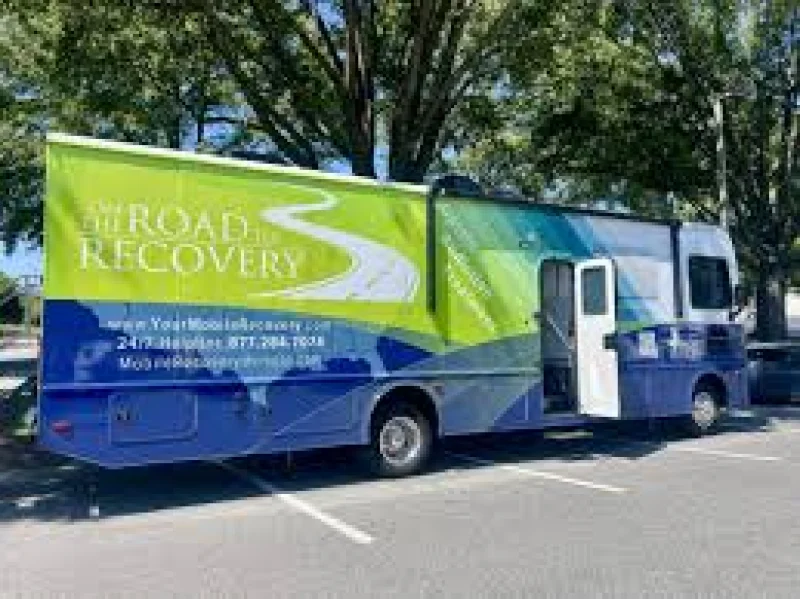
A mobile opioid treatment program has been traveling to Burlington since January, bringing medication for opioid use disorder to Alamance County residents for the first time. The unit parks outside the Alamance County Health Department and operates as a licensed extension of New Season Treatment Center’s Greensboro clinic.
That matters because the people using it often could not make the trip to Greensboro every day. Preston Evans said one patient could not travel all the way there, while another bikes about 15 to 20 minutes to the bus. About a month ago, a young woman stopped by to start treatment, and the mobile unit now parks about 10 minutes from her house.

The program is seeing the kind of demand that explains why it exists. It serves about 50 patients daily between Bethel African Methodist Episcopal Church in Greensboro and the Alamance County Health Department, which means the Burlington stop is not an experiment on the margin but part of a regular treatment route for people who would otherwise face a longer commute or no treatment at all. Anna Stanley said her hope is that the mobile service can reach people who otherwise could not have reached treatment.
The model also fits a broader push in North Carolina to make opioid use disorder care easier to reach. Transportation barriers and a lack of providers have kept many people from getting medication treatment, even though the U.S. Food and Drug Administration has approved three medications for opioid use disorder: buprenorphine, methadone and naltrexone. Only a fraction of people with the disorder receive medication treatment, which is why state leaders and providers have been expanding mobile care.
There is still a limit to how far one bus can go. Evans said he has watched the mobile unit change lives, but he also described patients who cycle in and out of treatment for years because the path back is so hard to keep. The state’s third mobile unit, run by SouthLight Healthcare, began serving patients at Oak City Cares in Raleigh on June 15, five more mobile units are expected to begin serving western North Carolina in the coming months, and another is being planned in Mecklenburg County. Together, they show a system trying to catch up with need that still outpaces capacity.