reshuffled its Fifa Standings after one match in the 2026 World Cup group stage, ranking all 48 teams and putting a new No. 1 at the top. The move came after a first round that delivered shocks, blowouts and enough uneven play to shake up the early order without changing the tournament favorites very much.
The timing matters because every team still has two more group-stage games left, which means one-third of the schedule is complete and the standings can still swing sharply before the Round of 32 picture comes into focus. The expanded field has made every result matter more, and the first set of rankings is already being treated as a live snapshot rather than a fixed hierarchy.
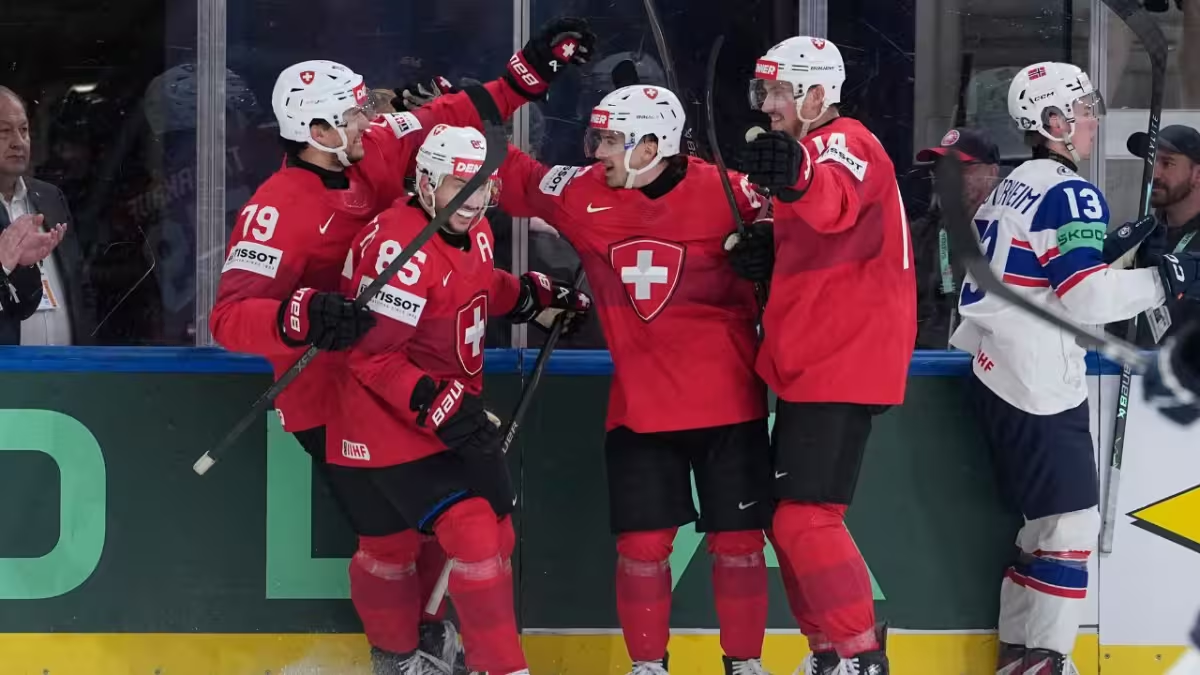
Several teams made the case for a quick rise. Jordan’s decent showing against Austria in its World Cup debut gave it a better opening than many expected, while Qatar forced a 1-1 draw with Switzerland after an own goal in stoppage time. South Korea was allowed back into the game after Qatar had control earlier, a reminder that a result can look settled and then slip away in a single phase.
Other teams went the other way. Tunisia played so badly in its first match that it fired its coach, and Curacao took a heavy defeat against Germany even after Livano Comenencia had briefly given it life by making it 1-1 for 17 minutes. South Africa offered almost nothing in its opener and lost a pair of midfielders to red-card suspensions, while Iraq fell 4-1 against Norway even with Aymen Hussein scoring.
Panama also felt the cost of a late breakdown. Gustavo Alfaro’s team let a clean sheet and its first-ever World Cup point slip away before conceding a later winner to Ghana on June 17, a turn that pushed it down in the early ranking. That sort of result is exactly why the new ordering matters now: the first games have already separated teams that looked steady from teams that looked exposed.
The sharpest friction in the rankings is at the very top. The title favorites largely stayed where they were, but the previous No. 1 showed enough cracks to lose the spot, which means the early pecking order is already more fragile than it looked before kickoff. Chris Wood caused problems for Iran in the opening match, Spain and Germany still sit among the major names being watched, and Austria in particular drew a useful read on Jordan’s level in the opener.
There is still a long way to go before the group stage settles anything. The majority of third-place teams can still advance to the Round of 32, so the early Fifa Standings are only the first cut of a bigger race. For teams like South Africa, Tunisia and Iraq, the next two matches are less about style points than about recovery; for the leaders, they are a chance to prove the new order is real.
One player who keeps surfacing in that early conversation is Duckens Nazon, who was missed while nursing a hamstring issue when Sebastian Migne’s side could not score against Scotland. In a tournament this open, absences and small injuries can change the shape of a ranking almost as much as a result, and that is why the next round of games will matter as much as the first one did.