


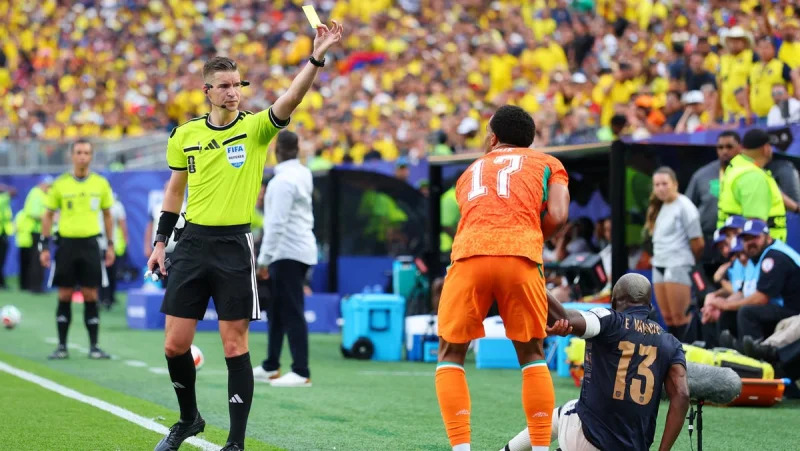
FIFA has added two new ways for players to be sent off at the 2026 World Cup: covering the mouth during a confrontation and deliberately walking off the field to protest a referee’s call. The changes give referees a new basis for red cards in a tournament that will already be more crowded, more intense and more unforgiving than the one that came before it.
The move is being searched now because it lands in the same summer that FIFA is rewriting the discipline book for the expanded event. The 2026 World Cup will grow from 32 teams to 48 teams, which means more games, more pressure and more chances for a small gesture to turn into a costly dismissal. A red card still means immediate removal and a one-match ban, while a second yellow in the same game still produces the same result.
One of the new rules was shaped by a February Champions League confrontation involving Gianluca Prestianni, Benfica and Vinicius Junior, when Prestianni covered his mouth with his jersey while directing abuse at Vinicius Junior. The other came after January Africa Cup of Nations final, when Senegal’s players left the field for nearly 15 minutes to protest a penalty call. FIFA is trying to cut down on unfair punishment from accumulated cautions, but it is also widening the list of acts that can trigger an instant exit.
That balance matters because the tournament will now wipe yellow cards clean twice instead of once. Any player who finishes the group stage with a caution starts the knockout round fresh, and the same reset happens after the quarterfinals. By the time the semifinals arrive, no player can still be carrying a yellow-card threat into that stage. If a player reaches either reset point with two yellows before then, the suspension still stands and he misses the next game.
The practical question is how often referees will use the new red-card offenses once the World Cup begins. FIFA has given itself more ways to punish conduct it sees as disruptive, while also softening the long reach of yellow-card accumulation. For players, coaches and team officials, that means fewer lingering cautions to fear, but a sharper edge whenever a confrontation spills over or a protest turns into a walkoff.
The result is a tournament rulebook that is meant to be cleaner, but not softer. Qatar Red Cards may now cover more behavior than before, yet the real test will be whether referees treat those new send-off reasons as rare exceptions or as part of the daily language of the 2026 World Cup.
