


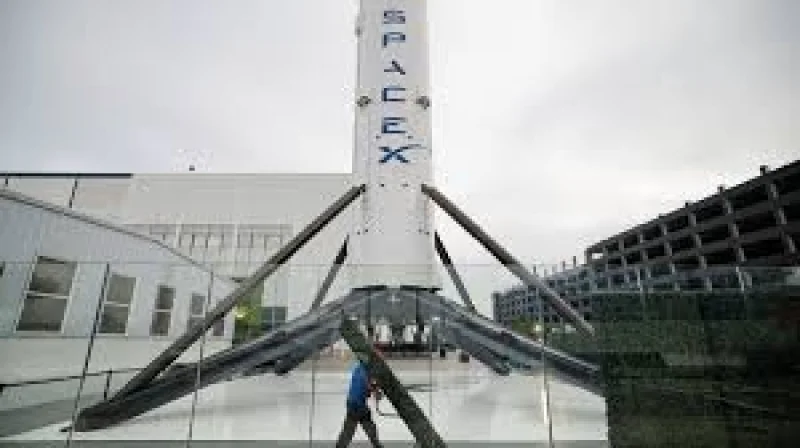
SpaceX’s stock price dropped again after last week’s IPO, even though the company raised about $75 billion without letting any existing holder sell a single share at listing. The offering was built entirely from 555.6 million newly issued Class A shares, and every dollar went to SpaceX itself.
That is why the trade is being watched so closely now. SpaceX said the money will largely fund its AI buildout, but the market is already asking a different question: when does the stock start to become a real liquidity event for the people who have been inside it longest? For now, insiders still control roughly 95.8% of the equity, and the first meaningful selling windows are still ahead.
Chad Anderson, whose firm has backed SpaceX for almost a decade, put the investor side bluntly: “We've been invested for almost ten years, it's our business to return capital to investors.” His point helps explain why the IPO has drawn so much attention beyond the headline number. A giant offering can be celebrated as a milestone and still leave early backers waiting for a way out.
That wait is governed by layers of lock-up rules. Elon Musk and certain significant investors agreed to a 366-day lock-up, while employees face their own restrictions. Lower-tier staff, including welders, cannot sell SpaceX stock today, and their equity stays frozen until the first release window after Q2 earnings. The directed share program covers up to 5% of the IPO shares for individuals selected by executives, and those buyers receive fresh stock at the offer price before they can sell after the first earnings report.
Critics have framed the listing as possible exit liquidity for insiders, but the structure does not support that reading yet. No existing holder sold at listing, and the real supply shock is still staged for later. Up to 20% of eligible insider shares unlock after Q2 earnings, expected between mid July and September, then another 10% can come free if SPCX holds 30% above the offer price for five of ten sessions. After that, five 7% tranches follow at 70, 90, 105, 120 and 135 days, another 28% unlocks after Q3 earnings, and full release comes at 180 days.
That matters because the market is not just digesting one IPO; it is pricing a chain of future unlocks against immediate demand. Nasdaq’s fast entry rule and MSCI’s early inclusion push index funds to buy within weeks, which may help absorb shares as they become available. SpaceX also entered public trading with $18.7 billion in 2025 revenue, a $4.9 billion net loss in 2025 and a valuation near 94 times trailing sales, a combination that leaves little room for disappointment.
The next test is not whether insiders can sell today. It is whether the first post-Q2 unlock arrives into demand strong enough to keep the SpaceX stock price from sliding further, or whether the market starts treating the listing as the opening chapter of a much larger distribution.
