


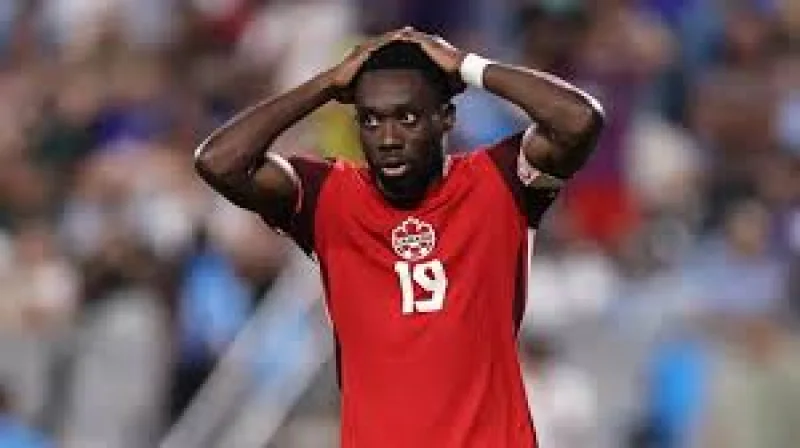
Canada has Alphonso Davies back in the conversation for its next duel, but not back under any promise of minutes. Jesse Marsch confirmed the 25-year-old will be available after a hamstring injury, while making clear he will not put him on the field if caution is the safer call.
That matters now because Davies is not just any returnee. Canada used him against Qatar, and before the 1-1 draw in Toronto he gave a locker-room speech that underlined how central he remains to the group. After missing time since March 2025 because of health issues and then suffering the hamstring injury in May in the Champions League semifinal with Bayern de Munique, his status is the first real lineup question hanging over Canada’s next match.
Marsch drew a line between availability and risk. He said the team does not want to place players’ health in danger and will calculate the situation carefully, which leaves Davies in a narrow space: cleared to be involved, but not guaranteed to be used. That is the part that shapes this story today, because Canada is preparing for a match that could ask for his pace, his dribbling and his authority, even as the staff looks at his recovery through a stricter lens than the scoreboard.
The people around him do not sound ready to treat him like a normal substitute. Stephen Eustaquio said Davies is the captain and that his presence matters, not only on the field but in training, meetings and team meals. Richie Laryea said people cannot imagine everything Davies brings to the team, and Alistair Johnston called him unique and irreplaceable, adding that he does not think there is a better dribbler in the competition. Those are not throwaway compliments. They are the way a team talks about the player it still leans on most, even while trying not to rush him.
The practical answer is still the one Marsch left open: Davies may travel with the group into the next duel, but his minutes will depend on how the match unfolds and how much risk the staff is willing to accept. For Canada, that means the biggest name on the sheet is available, yet the most important decision may be whether keeping him safe matters more than starting him.
