


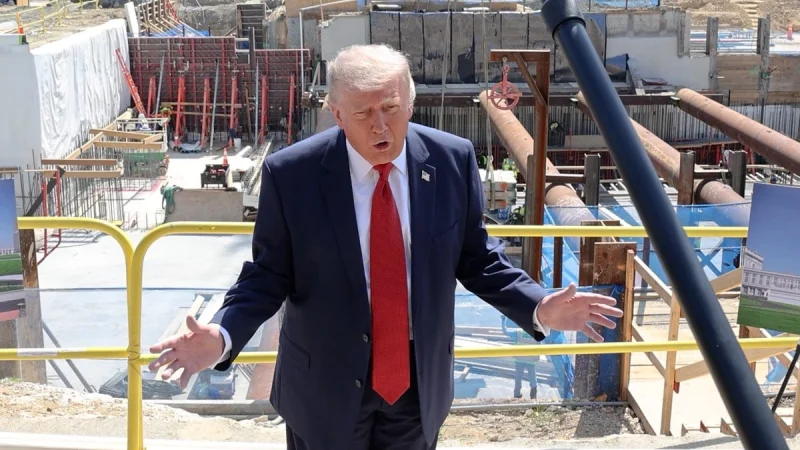
The White House ballroom that Donald Trump once described as taxpayer-free is now carrying a $600 million price tag, and about half of it is expected to come from taxpayers. That is a sharp climb from the $200 million figure first attached to the project.
The shift matters because the ballroom is not some vague promise of future work. It is a large construction project at the White House, and the new estimate puts the cost and the financing burden in plain view on June 16, when the updated numbers were reported. For readers trying to understand who is paying, the answer is no longer the one Trump gave when he said it would be paid for “100% by me and some friends of mine.”

Internal project estimates had already pointed in another direction. One March 5 estimate cited $155 million from the Secret Service, $149 million from the White House Military Office and $3 million from the Executive Residence, all sources funded by taxpayers. Put together, those figures show how a project once presented as privately financed was, from the start, built around public money.
That is the hard part of the story. Trump’s public pitch and the internal budgeting did not match. He told supporters the ballroom would cost taxpayers nothing, but the project summaries described a financing plan that leaned heavily on taxpayer dollars even before the price moved higher. If the estimate really rose from $200 million to $600 million, the obvious question is what changed so dramatically inside the project to triple the cost.
For now, that question remains unanswered. What is clear is that the White House ballroom is no longer being talked about as a taxpayer-free vanity project. It is being discussed as a far more expensive build, with taxpayers carrying roughly half the load and the final explanation for the jump still missing.
