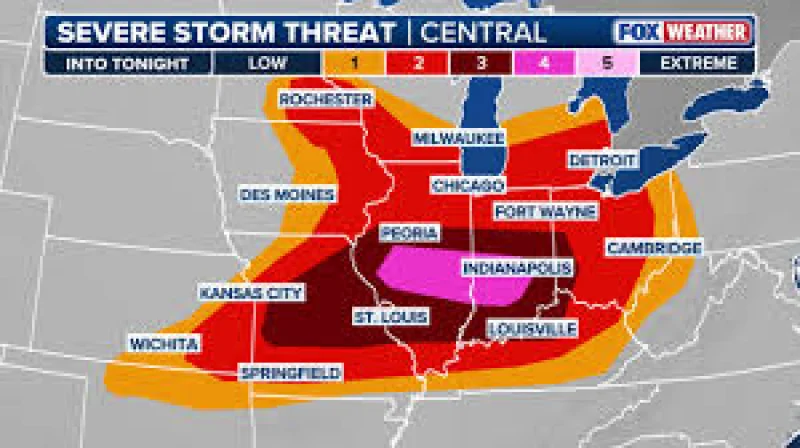
A Tornado Warning with a Particularly Dangerous Situation designation was in effect Tuesday night for parts of central and south-central Indiana as a large tornado moved east across the state. At 9:57 p.m. EDT, it was about 8 miles southwest of Martinsville and roughly 10 miles north of Bloomington, with the warning saying flying debris could be deadly and complete destruction was possible.
The warning covered Monroe, Morgan, Brown, Johnson and Bartholomew counties until 10:45 p.m. EDT, and it came as severe storms were producing tornado, wind and hail reports across the Midwest. Residents in the path were told to expect a fast-moving storm, with the tornado traveling at 45 mph.
That urgency matched what was already unfolding farther west. Wednesday's outbreak left a trail of structural damage, downed trees and power lines from Iowa through Illinois and into Indiana, and several tornadoes were confirmed during the day. In Clark County, a confirmed dangerous tornado lofted debris thousands of feet into the atmosphere, and radar showed a debris signature stretching about 20 miles northeast of the track.
The debris did not stop there. FOX Weather's Debris Tracker showed material carried as far as 21 miles from the tornado, a reminder that the worst effects of a violent storm can spread well beyond the narrow line of rotation that people see on radar. That is why warnings like this one are written in blunt language: mobile homes can be destroyed, and homes, businesses and vehicles can take considerable damage in a matter of seconds.
Brandon Copic saw that kind of damage up close in Teutopolis, Illinois, where he rushed into a heavily damaged home moments after a twister swept through the area. His account fit the larger picture of a broad outbreak that was hitting a long corridor from Iowa through Illinois and into Indiana, with the hardest-hit areas still being sorted out.
The next step is the part that often takes longer than the warning itself. National Weather Service survey teams are expected to keep assessing damage in the days ahead, and those findings should show how many tornadoes were confirmed across the full outbreak and how much of the destruction came from the track itself versus debris thrown miles away.