


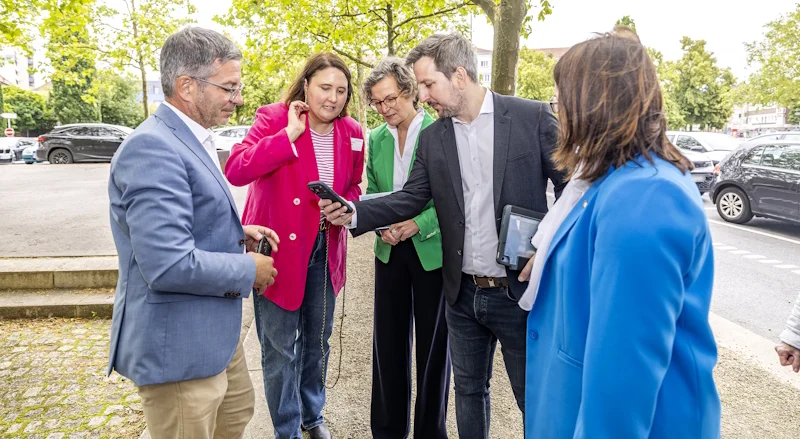
Hamm put its new city history app, Heimat Hamm, in the spotlight on 15 June, presenting a free digital tour that blends the past and present on the screens of mobile devices. The route uses Augmented Reality and leads visitors through the Hammer Innenstadt, ending with a surprise station after eleven historical stops.
Marc Herter used the presentation to urge people to download the app and experience the city’s history in a new way. He thanked everyone involved in the project and pointed to the support from Land NRW, which helped make the digital city tour possible. Ministerin Ina Scharrenbach was also present on the Hammer Marktplatz as the city framed the app as part of its digital push.
The launch matters because Heimat Hamm is not built for one audience alone. It is free and open to long-time residents, newcomers and guests, but it is also meant for families, school classes and tourists, which makes the app both broad and specific at once. For people with visual impairments, the project includes Klippi, the Audio-Only mode, so the same route can be followed without relying on images on a screen.
That range of use sits at the center of the friction around the project. A single digital offer has to serve people who want a playful city tour, people who want a history lesson and people who need a different form of access altogether. The city has tied the app to a 430,000-euro effort to digitally process its history, with Heimat-Zeugnis as the main funding program and wezit transmedia solutions handling programming and development, while kollarneuber creative minds took care of branding and strategic marketing.
The round trip is set up as a digital journey through the Stadtkern, with all stations located inside the city center and the Hauptbahnhof among the stops. The surprise station at the end is left open in the presentation, which is part of the point: the city is not just digitizing memory, it is turning local history into a guided walk that invites people to keep going until the last step.
Herter cast that idea as both a look back and a step forward. In his words, the app is meant to make Hamm’s history tangible in the jubilee year and create room to think about the city’s shared future. Whether people come for the technology, the stories or the access options, the next thing they need is simple enough: open the app, start walking, and see how much of Hamm can be rediscovered in about two hours.
