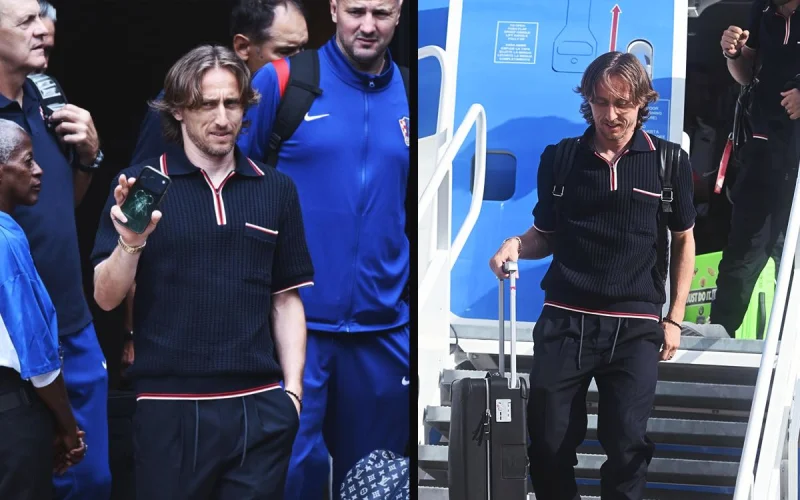
Luka Modric is heading toward another meeting with England in Dallas, and the timing gives the old rivalry a fresh edge. It comes almost 20 years after he first faced them and after a career that has repeatedly left England chasing him.
Modric first played England in the European Championship qualifier in Zagreb on 11 October 2006, when Croatia won 2-0 and the midfielder played the full match despite already being only in his 11th cap. That night carried a detail football can never quite erase: Gary Neville’s backpass, Paul Robinson’s miss as the ball bounced through, and Sacha Baron Cohen’s image on the boards behind the goal.
He had already arrived on the international stage that year, after a debut cap in a friendly in which Lionel Messi scored his first goal for Argentina. From there, England and Croatia met eight more times, and Modric kept showing up as the constant in a rivalry that changed shape but never really lost its familiarity. A year after that first qualifier, Croatia beat England again at Wembley in the game remembered as the “wally with a brolly” match, even though Croatia had already qualified for the Euros and England needed only a draw to go through.
That history is part of why the next meeting in Dallas matters now. Modric has been presented as ready for what may be one last game against England, but when asked about his future with Croatia he refused to offer any real clue. He did say he wanted to help the team, which is about as far as he was willing to go. For a player who has made a habit of deciding the mood of matches against England, even silence feels loaded.
There is still the awkward fact that the rivalry has not always gone his way. Modric missed one meeting because of a broken fibula, and England won that one 5-1 in 2009. Croatia’s wider tournament record around him also explains why his presence carries so much weight: they fell to Turkey in the Euro quarter-finals after leading for 119 minutes, and across the past two World Cups they won seven knockout round games before losing to the eventual winners on both occasions. Modric has been the thread through all of it, across changing squads and changing expectations.
So the next England meeting is not just another fixture for him. It is the latest chapter in a rivalry that began when he was still building his name and now may be nearing its end in Dallas. What remains unresolved is simple enough: whether Modric gets one more chance to shape England’s night, or whether this is the last time the old problem shows up in Croatian colors.