


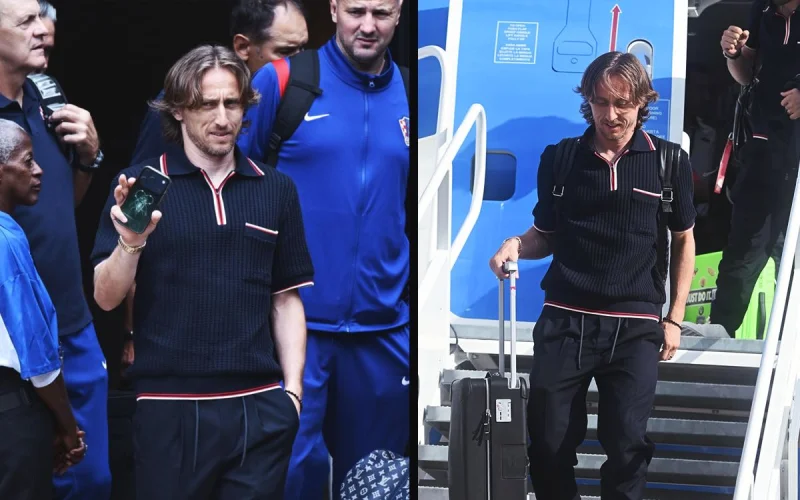
Luka Modrić first played against England on 11 October 2006, and Croatia beat them 2-0 in Zagreb. He was 11 caps into his international career, and he played the full match as a long rivalry began with a result that would echo for years.
That first meeting keeps drawing attention because it came at the start of a run that stretched across two World Cups and eight more matches between the sides. Modrić was still only a young midfielder then, but the game already showed something that would become familiar: Croatia with him on the pitch had a calmness and control that England struggled to break.
The decisive moment was clumsy rather than spectacular. Gary Neville sent a backpass to Paul Robinson, the ball bounced awkwardly on the edge of the six-yard box, and it ended up in the net. Modrić did not need to score to shape the result. He spent the whole 90 minutes helping Croatia hold the game together, and that was enough to set the tone for what followed.
What makes that night matter now is that it was the first clear sign of Modrić as the constant in a national side that kept changing around him. He had won his first cap in 2006 in a friendly in which Lionel Messi scored his debut goal for Argentina, and from there his career moved quickly from promising midfielder to the player Croatia kept turning to in the biggest matches. The transformation was not about one sudden leap. It was about repetition, responsibility and the habit of making the right pass when the match tightened.
England and Croatia met again a year later at Wembley, when Croatia had already qualified for the Euros and England needed only a draw to get there. Croatia won again. Slaven Bilic led that side, and before the Euros Modrić agreed to leave Dinamo Zagreb for Tottenham, another step in a career that kept pushing him into bigger arenas. Croatia then won all three group matches at the Euros, only to be eliminated by Turkey in the quarter-finals after leading after 119 minutes. The result captured the gap that still existed then: Modrić had become the standard, but Croatia as a team had not yet fully learned how to carry his mentality all the way through.
England would beat Croatia 5-1 in 2009, in a match Modrić missed because of a broken fibula, another reminder that their meetings were never only about one team or one night. Over the years, England remained the opponent that kept measuring him, and Modrić kept answering. That is why the first meeting in Zagreb still matters. It was not just the start of a fixture. It was the start of the version of Croatia that expected its answers to come through him.
Even now, the next chapter is less about whether Modrić can still impose himself than about how long Croatia can keep relying on the standards he set. The history against England says the answer has already been written once. The harder question is whether anyone else in the side has learned to write it the same way.
