


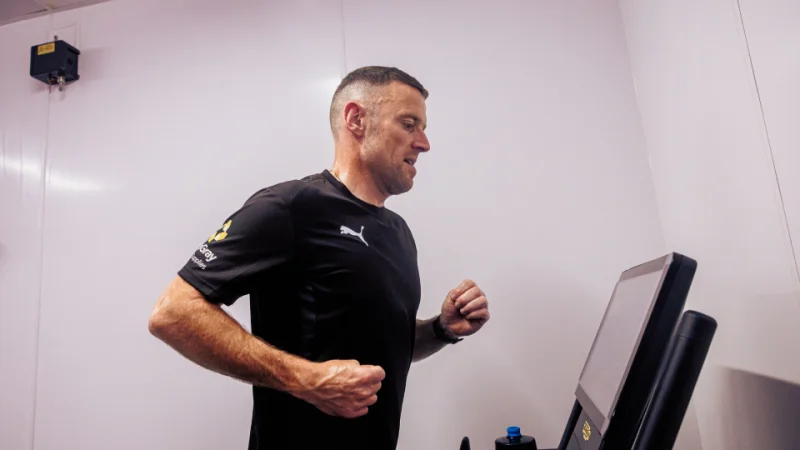
Stuart Burt has finished a three-week block of heat-acclimation training at Loughborough University as he prepares to officiate at the FIFA World Cup. The England match official completed ten sessions in the university’s physiology department before heading to Miami, his base for the tournament.
The timing matters because temperatures in North America are forecast to exceed 30C+, and officials are being asked to cope with conditions that can make even routine movement costly. Burt has already handled more than 500 Premier League matches, the FA Cup final, UEFA EURO 2020, UEFA EURO 2024, the FIFA Club World Cup 2025 and the last FIFA World Cup in Qatar in 2022, but this tournament brings a different physical test.
Hannah Bashford said the sessions produced clear changes. Burt’s tympanic temperature and heart rate fell during work in the chamber, while his sense of how hard and hot the conditions felt also dropped. In simple terms, the same workload placed less strain on his body after repeated exposure, which is the point of heat preparation in elite sport.
Bashford also said Burt’s sweat rate increased as he became better at regulating heat, and his fluid intake rose to help offset dehydration risks and drops in body weight. That is the friction in the plan: North America is still expected to be hot enough to punish anyone unprepared, yet the training is designed to make the heat easier to handle when it arrives.
Burt’s case also reflects how seriously Loughborough approaches sport science. The university was named the best in the world for sports-related subjects in the 2026 QS World University Rankings, ranked eighth in the Complete University Guide 2027 and named University of the Year for Sport in the Times and Sunday Times Good University Guide 2025. For Burt, the immediate task is simpler: carry the benefits of those ten sessions into a World Cup that will be played in Miami and other locations he may be sent to, with the expectation that the heat should now feel more manageable.
