


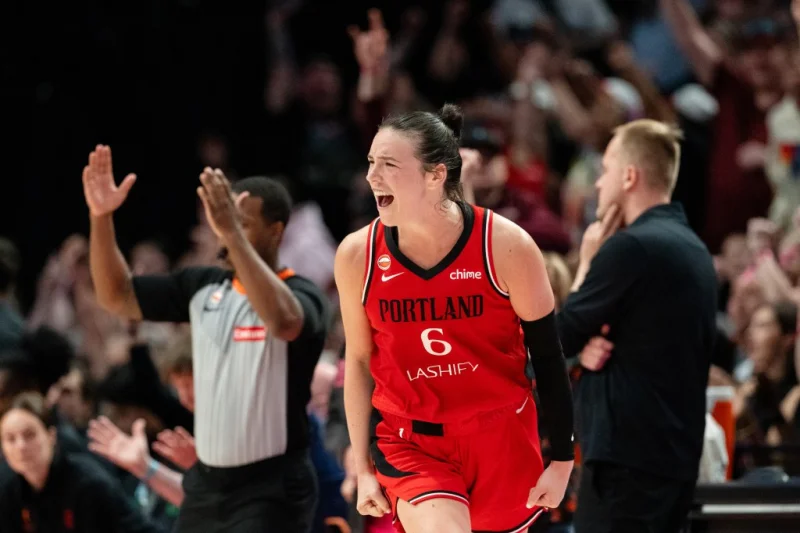
The Minnesota Lynx are trying to reset quickly after their eight-game winning streak ended at Las Vegas on Saturday night, and the timing leaves little room to linger. Portland Fire arrive Monday, June 15, with Minnesota still carrying the look of a team that expects to answer immediately.
That expectation is not built on record alone. Olivia Miles has been the engine. Through her first eight games, the Lynx point guard averaged 5.9 assists and 15.4 points while taking 11.3 shots per game. In her last five, those numbers jumped to 5.8 assists, 23.8 points and 13.8 shots, a run that tracks with Minnesota’s broader surge.
The Lynx entered June with the No. 2 offensive rating in the WNBA and climbed to No. 1 by the end of the month, a rise that came even though this team is still known first for its defense. The offense was 11.3 points per 100 possessions better in June than it was in May, and that is the kind of swing that changes how opponents have to prepare for Minnesota on a short turnaround.
For those tracking the matchup as much for the numbers as the result, Minnesota has also been rewarding bettors. The Lynx went 4-1 against the spread in June, cashed four out of five overs, and are 8-1 against the spread in their last nine games. The lone loss in that stretch came in the only game they did not cover, a reminder that even a hot team can still miss the number when the margins tighten.
There is still a complication around the Fire-Lynx meeting. Minnesota listed Napheesa Collier as out, while Portland listed Nyadiew Puoch as questionable. That matters because the game was already set up as a bounceback spot for the Lynx after Saturday’s loss, and without Collier, the responsibility shifts even more onto Miles and the rest of the rotation.
So the matchup lands with a simple question attached to it: whether Minnesota can turn a streak-ending loss into another clean response, or whether the Fire can make the night messier than the form book suggests. For a team that had won eight straight before Saturday, Monday is less about proving the streak was real than showing it did not leave with the next result.
