


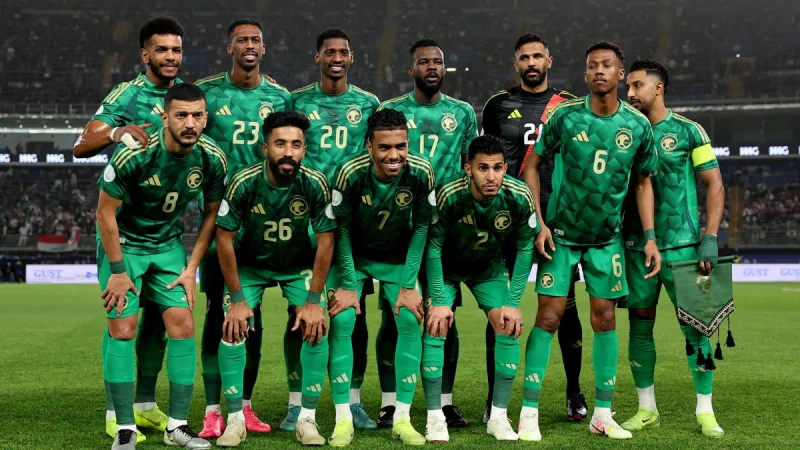
Saudi Arabia reached the 2026 World Cup the hard way, edging through playoffs after a football spending spree that ran to roughly $2 billion and still left the Green Falcons needing a lifeline. The climb was made steeper by a last-minute coaching change, a reminder that money and ambition did not turn qualification into a certainty.
That is why the search for Saudi Arabia World Cup is so pointed now. The team’s path comes after years in which the Public Investment Fund poured cash into football, lifting the Saudi Pro League into a destination for aging stars and tying the national game to the broader Saudi project. Cristiano Ronaldo joined Al-Nassr, Neymar landed at Al-Hilal and Karim Benzema signed with Al-Ittihad, while four clubs — Al-Nassr, Al-Hilal, Al-Ahli and Al-Ittihad — fell under PIF’s management umbrella.
For Saudi Arabia, the most vivid proof of what that spending bought came in November 2022, when it beat eventual champions Argentina 2-1 at Lusail Stadium. That result still sits alongside the bigger reality now: the national team did not cruise into the 2026 World Cup, even though the expanded 48-team format was supposed to make the road easier.
The gap between the spending and the result is where the story lives. Saudi Arabia needed a playoff lifeline and then had to adjust to a last-minute coaching change just to get across the line. The football empire built around PIF has changed the look of the Saudi Pro League, but it has not delivered a smooth pipeline for the national team, and that makes the qualification path look more fragile than the headline budget.
PIF was later confirmed as an official supporter of the 2026 FIFA World Cup on May 14, 2026, a move that fits the same long-running push and aligns with Saudi Arabia’s bid to host 2034. The next question is not whether the spending spree can attract more attention; it is whether it can produce a national side that no longer has to survive by playoff and patchwork when the tournament itself should already have been within reach.
