


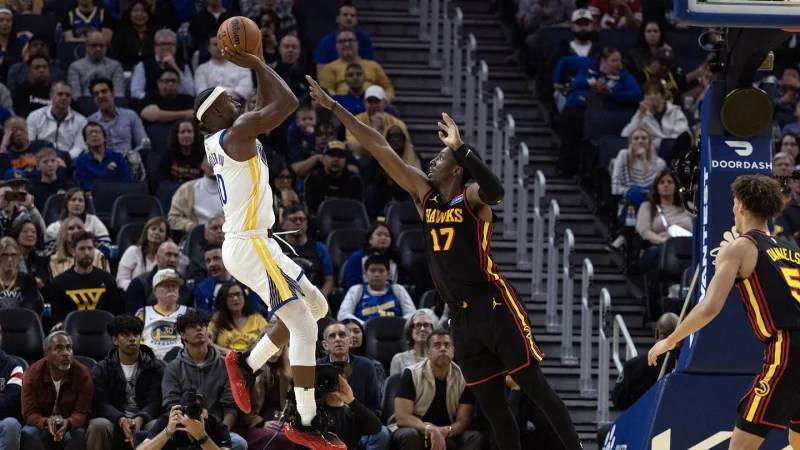
The Golden State Warriors have been linked to a roster move that would put Stephen Curry beside LeBron James and Anthony Davis, a combination that would turn one offseason idea into one of the NBA’s most aggressive swings. The plan is not framed as a done deal. It is framed as a reach, and a very expensive one.
That is why it is drawing attention now. Last summer, the Warriors were one of only four teams to officially contact Rich Paul to gauge LeBron James’ availability, and that earlier outreach now looks like the first step in a much bigger pursuit. The current version of the idea would not just chase one star. It would try to build a three-star core around Curry, James and Davis, with the Warriors searching for a path that could make the numbers work.
The basketball case is obvious on paper. Curry is coming off a 2025-26 campaign in which he averaged 26.6 points, 4.7 assists and shot 39.3% on 11.3 three-point attempts per game. Davis posted 20.4 points, 11.1 rebounds, 1.7 blocks and 1.1 steals in the same campaign. Put those numbers together and the appeal is easy to see: one elite scorer off the dribble, one all-time playmaker and one two-way interior force.
The problem is the structure. Any market-rate deal for James would push the Warriors’ payroll past the second luxury tax apron before a supplementary roster spot is even filled. Under the NBA’s current rules, operating over that apron strips a team of the ability to aggregate matching salaries or take back more money in a trade. That means the Warriors would have to solve a multi-team salary-matching puzzle while also clearing enough room to absorb a contract of that size.
That is where the math gets unforgiving. Curry is locked into a $62.6 million salary slot, Davis has a $58.5 million contract and the NBA is projecting a $165 million salary cap. In practice, a team chasing this kind of move would need outgoing salary that can legally match incoming money, plus whatever draft assets are still available to grease a deal. The source makes clear the Warriors would have to empty what remains of their future draft capital to even try.
That is also the point at which the clean super-team picture breaks down. The Warriors can want a roster-shifting layout that pairs Curry, James and Davis. The current CBA can still stand in the way. Once a team crosses the second apron, it loses the flexibility that makes complicated trades possible, which is exactly the flexibility a three-star construction would demand.
So the next question is not whether the Warriors would like the idea. They clearly do. It is whether they can build a legal trade framework that survives the apron rules long enough to matter. If they cannot, the conversation stays where it is now: as one of the league’s loudest ideas and one of its hardest deals to execute.
