


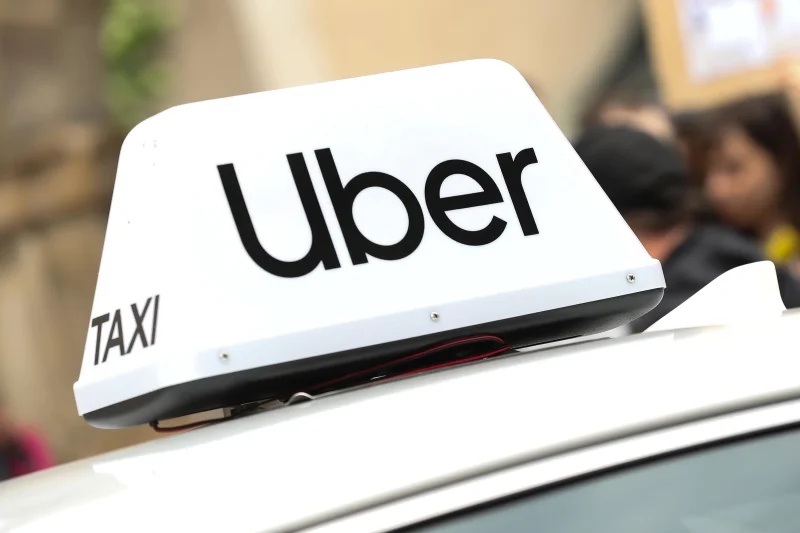
Uber Technologies shares have fallen 14% in 2026 and were trading 30% below their peak as of June 10, a drop that puts fresh scrutiny on Uber stock even after years of growth. The market is now asking whether a cheaper valuation is enough to offset the risks that come with a business built on mobility, delivery and a technology shift it does not fully control.
That question matters because Uber still trades at 17.5 times earnings, a multiple that looks modest beside the company’s scale and its broad platform. Mobility connects riders and drivers. Delivery links consumers, couriers and merchants. Together, those networks deepen the company’s value proposition as more people use the platform, which is why investors have long argued that Uber’s network effects support a wide economic moat.
For Dara Khosrowshahi, the case is not that human drivers are going away, but that Uber can sit inside the transition. He has said the company is positioned well in the face of ongoing innovation in mobility, and that a hybrid network combining human drivers and self-driving cars will be the path ahead. That is a practical argument, not a dreamy one. If it works, Uber keeps the demand side, the customer relationship and the matching system while swapping in whatever supply is cheapest and most available.
That same logic explains why the stock is getting a harder look now. Uber’s technological infrastructure is a strength, and so is its experience matching supply and demand. But autonomy also cuts at the heart of the durability story. A company described as having a wide economic moat can still face pressure if the underlying technology changes who owns the rides, who sets the economics and how much of the trip Uber itself can capture.
The valuation question is therefore less about whether Uber is cheap than about how much of that risk is already priced in. A 17.5 P/E can look appealing when a business remains dominant, but it also leaves room for investors to ask whether the market is discounting the possibility that self-driving cars narrow the moat faster than expected. Khosrowshahi is betting the moat survives by evolving into a mixed network. The next real test is whether Uber can turn that theory into a working model before the market decides the shift has already happened elsewhere.
