


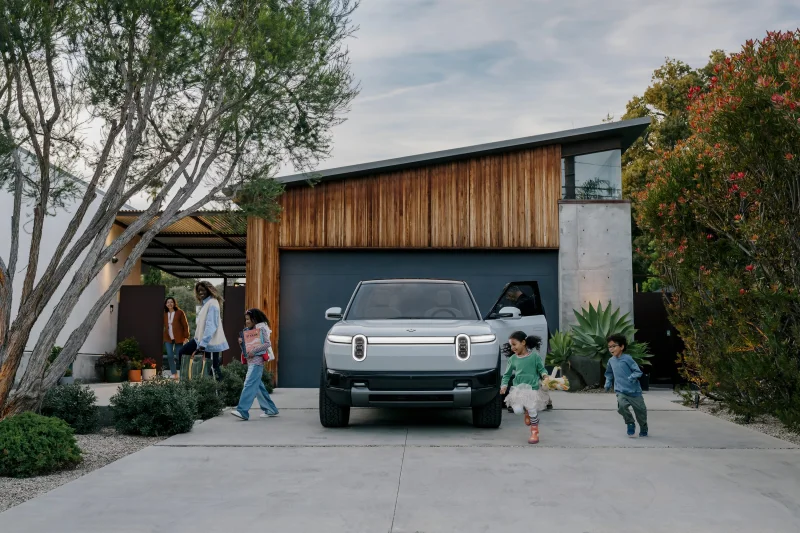
Rivian is going all in on self-driving vehicles and robotaxis even as its stock has lost roughly 25% of its value since the year began in 2026. In a recent disclosure, the electric vehicle maker said it no longer expects to be adjusted EBITDA positive in 2027, a shift that underscores how expensive the pivot could be.
The company also expects research and development spending to rise as it speeds up its autonomy roadmap. That puts Rivian, the focus of a new Rivian R2 pivot deepens as stock slides and robotaxi race heats up, into a race that is still years from proving itself at scale but could define the next phase of mobility.
The numbers behind the bet are large enough to explain why investors are paying attention. Uber Technologies has already placed a $1.25 billion order for up to 50,000 Rivian vehicles, with the trucks and sport utility vehicles set to feed Uber’s own robotaxi arm. At the same time, McKinsey & Co. says the global rollout of robo-taxis is now expected to become reality at a large scale in 2030, and it adds that experts see robo-taxis, not privately owned cars, as the first commercial use for L4 mobility.

That timeline matters because the industry is still in a buildout phase. Tesla has faced declining auto sales for several years, but this year it is dedicating the bulk of its $20 billion capital expenditure budget to new opportunities, including work tied to autonomy. Rivian is trying to answer that scale advantage with a narrower but aggressive strategy: become one of the key suppliers for a robotaxi market that is still forming.
The tension is that Rivian is betting on a future that may arrive after years of losses. The company’s latest guidance suggests profitability is slipping further away just as the autonomy push gets more expensive, and that means the market is being asked to value a bigger technological story while accepting a weaker near-term financial one.
By 2031, the risk for would-be buyers may be that the easy money has already been made. If Rivian’s robotaxi pivot works, the story may not be about whether the company found the right lane, but about whether investors were willing to wait long enough to get in before the road got crowded.
