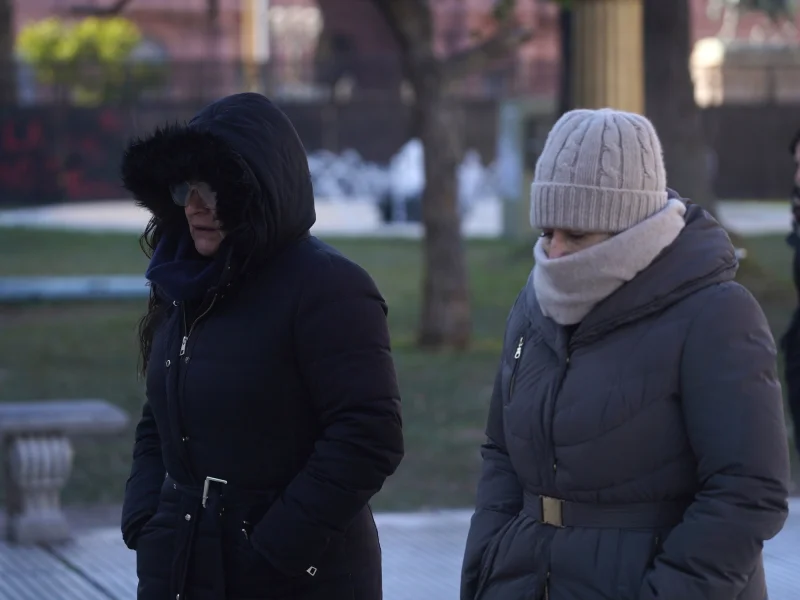
The AMBA woke up to a hard cold on Sunday, when the temperature fell to 2.8 degrees and reached its lowest point at 8 a.m. The sensation temperature had already dropped to 2 degrees at 5 a.m., turning the start of the day into one of the coldest of the year for the area.
The chill matters today because it did not stay confined to one morning. A yellow alert for extreme cold remained in place for parts of Buenos Aires province, northeast La Pampa, southeast San Luis, south Córdoba, south San Juan and west Chubut, with the warning that the temperatures could be dangerous, especially for children, people over 65 and those with chronic illnesses. Cindy Fernández said the low temperatures came from a cold front moving in from Patagonia, the same system expected to bring rain to central Argentina and snow in the Cordillera.
For Monday’s holiday, the forecast kept the cold in place. The SMN projected a minimum of 3 degrees and a maximum of 14 degrees for the AMBA, while Buenos Aires province and La Pampa were expected to stay below 11 degrees on Sunday and reach 14 degrees in the afternoon. In San Luis, the day was set to top out at 13 degrees, Córdoba at 11 degrees and southwest Chubut at 6 degrees, with Tuesday then expected to bring a gradual rise in temperatures.
That is the friction in the story: the freeze is real, but it is not open-ended. In Buenos Aires province and La Pampa, the holiday should still feel cold, yet the same forecast points to a break soon after, with temperatures beginning to climb from Tuesday and no more rain expected at least until Thursday. The cold is arriving at the edge of winter, but the sharpest bite is likely to ease after the holiday.
Farther south, the picture was harsher. Southern Santa Cruz and Tierra del Fuego were under a yellow alert for strong winds on Sunday, with the warning extended through Monday and reaching southern Chubut as well. In Tierra del Fuego, rain and snow were expected during Sunday and Monday, with maximum temperatures of 6 degrees and southwest winds up to 60 km/h, while Santa Cruz was set to see gusts of up to 60 km/h from the south and from the Cordillera de los Andes.
For now, the question is not whether the cold reached Argentina. It already did. The question is how long the holiday period will keep large parts of the country in the zone of cold alerts before the air turns milder again.