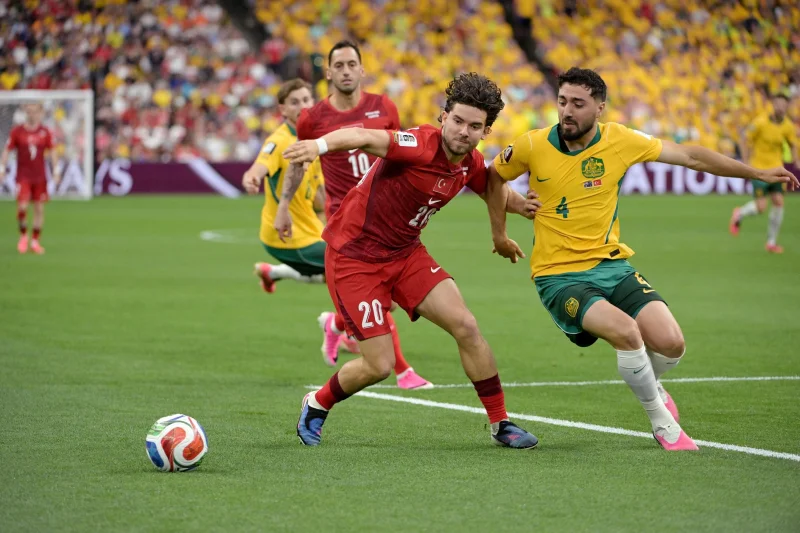
John “Trey” Rogers III has spent years looking at the surface before anyone else looks at the score. “I always watch the grass before I watch the game,” he said, a line that fits a project built to make the playing field itself part of the tournament story at Lincoln Financial Field and the other World Cup sites.
The work behind that surface took five years and involved researchers from Michigan State University and the University of Tennessee studying grass planning for 16 World Cup stadiums and numerous training sites across countries and climate zones. The goal was simple in concept and difficult in practice: keep the surface consistent enough that players should feel the same footing in Miami, Mexico City or Vancouver, and make the ball behave the same way from one venue to the next.
John Sorochan led the research and said the point was “consistency and uniformity.” That mattered because FIFA wants an even playing field for all 104 tournament games and traditionally opts for natural grass. Heimo Schirgi put the ambition bluntly in a 2024 video: “The importance of the perfect pitch cannot be overstated.”
The team did not stop at choosing grass. It tested species to identify the strongest performers, developed customized seed blends for sod farmers based on host-city temperatures and checked that the grasses reached the height required under FIFA specifications. Researchers also studied how to grow grass in indoor stadiums that lack plant-sustaining sunlight, using a shade structure FIFA built at the University of Tennessee to mimic a domed stadium. At eight World Cup stadiums, including Lumen Field in Seattle, they also worked out how to lay natural pitches over artificial turf.
That last problem exposed the hard edge of the project. FIFA wants the same natural surface everywhere, but the 2026 World Cup is unfolding across the US, Canada and Mexico through July 19, in climates and buildings that do not cooperate with one another. A pitch that performs one way under open sky can behave differently indoors or on top of artificial turf, which is why the researchers even used a machine with a 3D-printed foot and ankle fitted with a cleat to study how a player’s foot meets the grass.
The result is a tournament surface designed in advance, but judged in real time. The remaining matches will show whether the five-year effort delivers what FIFA funded and what Sorochan and his team were chasing from the start: a field that does not announce itself to the players at all.