


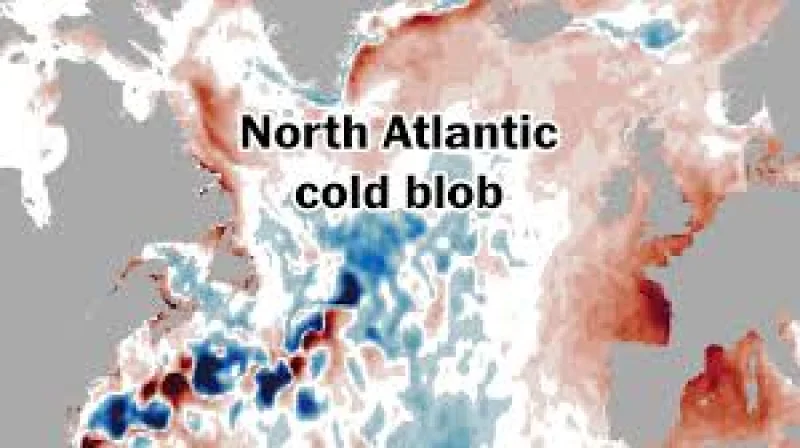
The minimal monitoring of the Atlantic Meridional Overturning Circulation is under acute threat of being discontinued just as scientists warn that the ocean system could collapse and make climate change in Europe up to 10 times faster than today. That would leave one of the Atlantic Ocean’s most important heat-moving currents with less direct observation at the moment the risks around it are being taken most seriously.
Readers are searching for the Atlantic Meridional Overturning Circulation because it is not an abstract climate term. It is a vast system that carries heat from the south to north in the Atlantic Ocean, helping regulate global climate, and changes in it can ripple into food security, coastal flooding, storms, energy demand, migration and infrastructure planning. Under current climate change, it is projected to weaken enough to radically change the weather and raise sea level in Europe.

The concern is sharpened by what is missing. Systematic monitoring began only two decades ago, when a handful of visionary researchers in different countries patched together individual nationally funded research projects. Since then, the measurements collected have become a benchmark for climate models, but the direct record remains short, and many new studies still rely on approximations of Amoc strength because past measurements are so scarce.
That scarcity is exactly why the uncertainty matters. Scientists say there is still little consensus on when and how fast major Amoc change will occur, even as the projected consequences are large. The system could weaken gradually, or it could cross a threshold that changes Europe’s climate far more quickly than expected. The warning is not only about the ocean current itself; it is about trying to judge a moving target with almost no long-term direct data.
What happens next is unclear, and that is the problem. The monitoring now in place is small, costly and vulnerable, yet it is the main source of direct evidence on a system that could drive major shifts in Europe. If it is allowed to end, climate models and policy planning will have to work with even less information about a circulation that has already become one of the most closely watched risks in the Atlantic Ocean.
