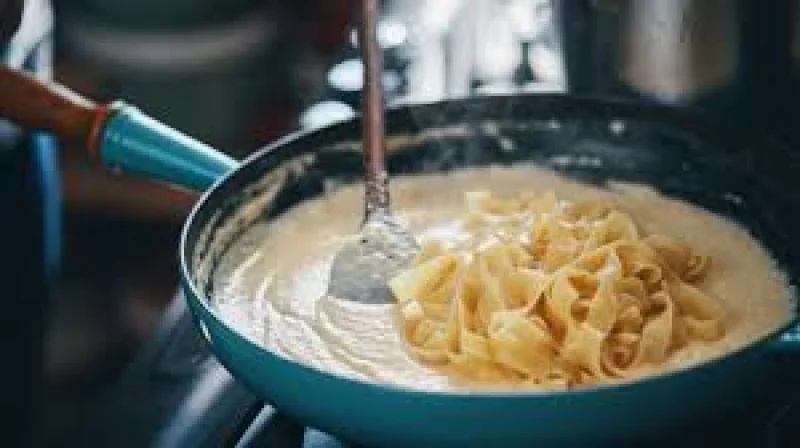
The FDA has classified a recall of 913 cases of Alfredo sauce as a Class I event, the agency’s most serious risk level, after a supplier recalled a dry milk powder ingredient used in the product because of potential salmonella contamination. The recall was voluntarily initiated on May 6 and remains ongoing.
The product was distributed in 41 states, putting the issue in front of consumers well beyond one region. The affected Alfredo sauce came from The Coffee Connexion Co., Inc., based in Lebanon, Tennessee, and was packed in 3-pound, 7-ounce sealed poly bags, 12 bags per case, with UPC 0039954921963.

What makes the recall stand out is not just the size of the shipment, but the warning attached to it. Salmonella can cause serious and sometimes fatal infections in young children, older adults and people with weakened immune systems, and healthy people may develop fever, diarrhea, nausea, vomiting and abdominal pain. That is why a Class I label matters: it signals a reasonable chance that exposure could cause serious health consequences or death.
The affected product included batches 046188 through 046193 with a best-by date of Jan. 12, 2028; 047290 through 047296 with a best-by date of Feb. 16, 2028; 048029 through 048034 with a best-by date of March 9, 2028; and 049089 through 049094 with a best-by date of April 20, 2028. The product reached Alabama, Arkansas, Arizona, California, Colorado, Florida, Georgia, Illinois, Indiana, Iowa, Kansas, Kentucky, Louisiana, Massachusetts, Maryland, Maine, Michigan, Minnesota, Missouri, Mississippi, Montana, North Carolina, Nebraska, New Hampshire, New Jersey, New Mexico, New York, Ohio, Oklahoma, Oregon, Pennsylvania, Rhode Island, South Carolina, South Dakota, Tennessee, Texas, Utah, Virginia, Washington, Wisconsin and Wyoming.
There is one notable omission in the federal report: it does not say whether anyone has become ill. It also says no press release was issued, leaving the public to rely on the enforcement listing itself for the details. For consumers who bought the sauce, the practical takeaway is simple — the recall is active, it carries the FDA’s highest risk label, and the safety concern traces back to an ingredient already pulled from the supply chain.