


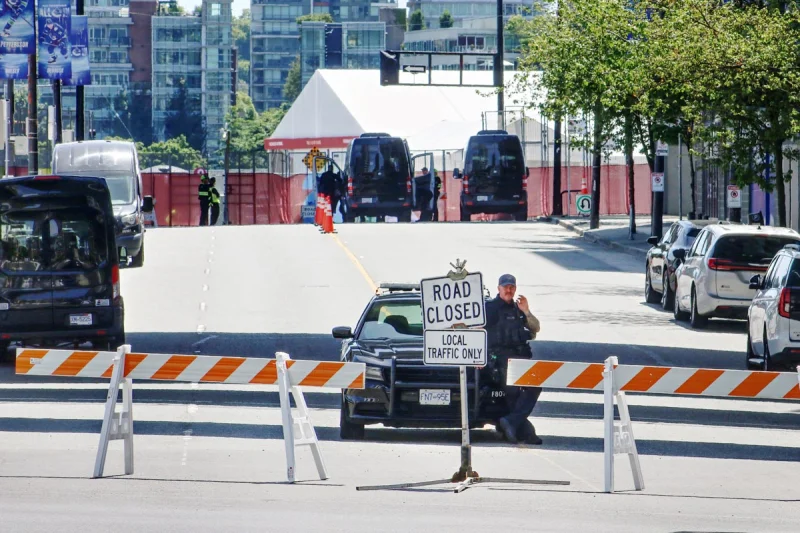
Tyson Singh Kelsall says Vancouver police have sharpened their enforcement in the Downtown Eastside since the start of 2026, a shift he and other residents link to security pressure around BC Place Vancouver and the World Cup. On 14 April 2026, he watched officers move five sedated people from a sidewalk on Main Street, and he said the response was forceful enough to raise the risk of injury.
Kelsall said the officers worked down the line of five people, yanking each toward the building wall before an ambulance arrived. He said they did not check whether anyone was breathing or ask if they needed help. “What do they think moving people just five feet will solve?” he said, adding that people sleeping on a sidewalk is not ideal but that the way they were handled could make things worse.
Power has been documenting police interactions in the Downtown Eastside since July 2024, and it says the pace of enforcement has increased since the start of 2026. Kelsall said it is now routine for several police officers, sometimes joined by city workers, bylaw officers and occasionally a housing worker, to move through the main corridor up to eight times a day. That kind of patrol pattern matters in a neighbourhood that sits beside BC Place and has long been at the centre of Vancouver’s housing, drug and mental health crisis.
The enforcement is not limited to one kind of encounter. Power has documented people being detained and handcuffed while officers search their bags, others being threatened with tickets for asking why they were being held, and $250 fines for smoking cigarettes. The pattern has fed a sharper argument in the neighbourhood: residents say they are seeing more aggressive policing, but the same streets also hold people in immediate danger from overdose and exposure.
That conflict is what makes the recent policing surge hard to dismiss as routine cleanup. A BC Centre of Substance Use study found police practices in the area can raise overdose risk by pushing people away from supervised consumption sites and into unsafe injecting environments. Residents and advocates blame the World Cup for the increase in enforcement, but the specific security directive behind the change has not been made public. For people on Main Street, the question is no longer whether the pressure is real. It is how far it will go before someone is hurt.
