


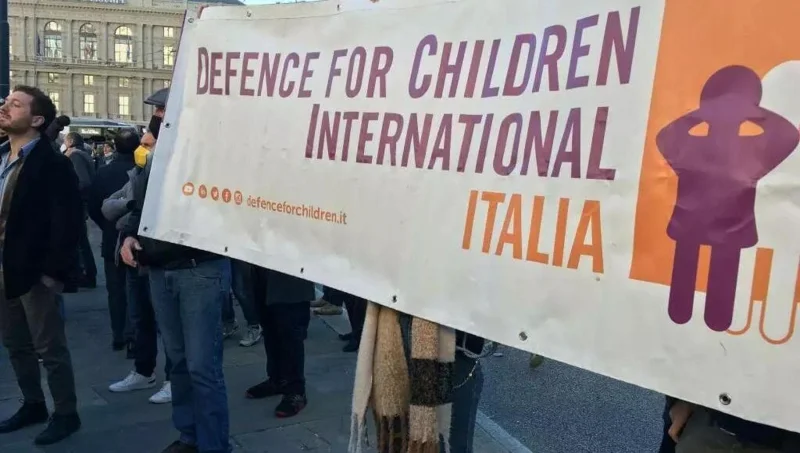
The new EU Migration and Asylum Pact entered into force on 12 June 2026, and Defence for Children International Italia moved immediately to condemn the way Italy plans to bring it into law. The group says the government’s use of emergency decrees to transpose Sui rules could strip unaccompanied foreign minors of protections they already have under Italian law and international standards.
The warning lands now because the pact is no longer a future framework. It is active, and Italy is being pushed to decide which parts it will copy quickly, which it will soften, and which it will resist. For Defence for Children International Italia, that choice is not technical. It is about whether children who arrive alone at the border are treated first as people in need of protection, or as cases to be processed fast.
Pippo Costella said the transposition risks “grave violations” and conditions of “precariousness and insecurity” for minors. He said the new border procedures could make the detention of children and adolescents systematic, even though no minor should lose personal liberty simply because they seek protection. The association also says the pact would legitimize a wider use of coercion to collect biometric data from the age of six, while screening should instead happen in dedicated facilities with trained staff, not at border crossings.
That criticism turns on time. The pact’s accelerated procedures compress legal deadlines and guarantees, but Italy currently excludes minors from those fast-track processes in line with the UN Convention. Defence for Children International Italia argues that opening the door to them would erase a safeguard that has been central to the Italian system. It points to Law 47/2017, the Zampa Law, as a model of excellence for protecting unaccompanied minors, and says the new European framework would cut across that model rather than strengthen it.
The same pressure would fall on the people meant to stand beside these children. Under the current Italian system, each volunteer guardian can follow a maximum of three minors, but the European rules would allow 30 to 50 minors per guardian. The association says that is not a matter of administrative efficiency. It would make real support thinner just when minors need it most, especially because deciding whether someone is underage requires psychological, social and medical assessments. Bone X-rays, it says, are an imprecise method that has already been censured by the European Court of Human Rights.
There is also a larger legal clash beneath the argument over border procedures. Defence for Children International Italia says long waits to identify the competent state freeze the lives of minors, and that Italy must be ready to assume direct responsibility when the first-entry country has systemic shortcomings. That position puts the government’s promised urgent transposition under a sharper light: if Rome moves quickly through emergency decrees, the key question is not whether it will act, but whether it will preserve the safeguards that Law 47/2017 made a reference point in Europe.
For now, the pact has started its life in force, and Italy’s response will decide whether that start becomes a tightening of protections or a narrowing of them.
