


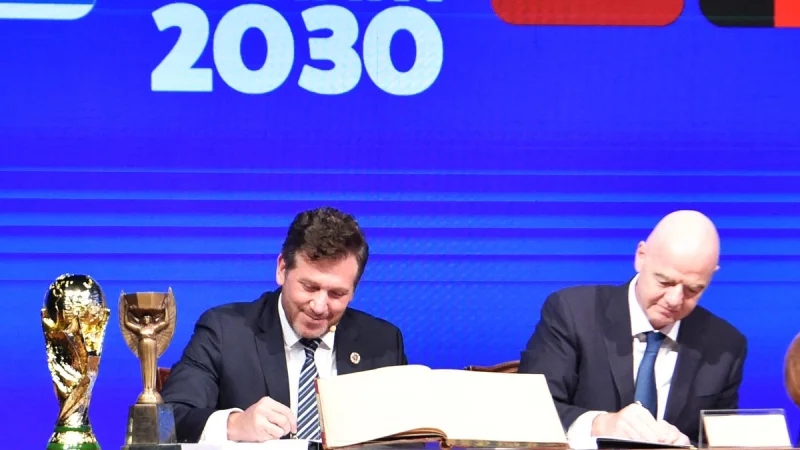
FIFA's World Cup 2030 is set to be staged across six countries on three continents, with Morocco, Portugal and Spain carrying almost all of the matches while Uruguay, Argentina and Paraguay each get one game in South America.
The tournament will mark the 100th anniversary of the first World Cup, and all six host countries are set to qualify automatically. No other teams have qualified yet, leaving the field for the centenary event still open beyond the hosts.
The draw for attention is obvious: this is the most geographically spread World Cup ever planned, and it comes with a built-in nod to football history. Uruguay gets a game because it hosted the first tournament in 1930, Argentina because it met Uruguay in that final, and Paraguay because it is home to CONMEBOL.
That unusual split has not quieted debate over the size of the tournament. CONMEBOL president Alejandro Dominguez said in 2025 that he dreamed of a World Cup with 64 teams and argued that it could unite the world and bring the game to more people, but FIFA has not officially settled the number. The current plan remains tied to the 48-team format introduced for the 2026 World Cup in Canada, the United States and Mexico, and there has been plenty of pushback to going bigger.
FIFA has also yet to release the official schedule, though it has said it will allow about 11 to 12 days for travel and rest before the second game for the six South American teams and about five to six days for the remaining six group opponents. The next big call is whether the centenary tournament stays at 48 teams or grows to 64, a decision that will shape how crowded, and how ambitious, World Cup 2030 becomes.
