


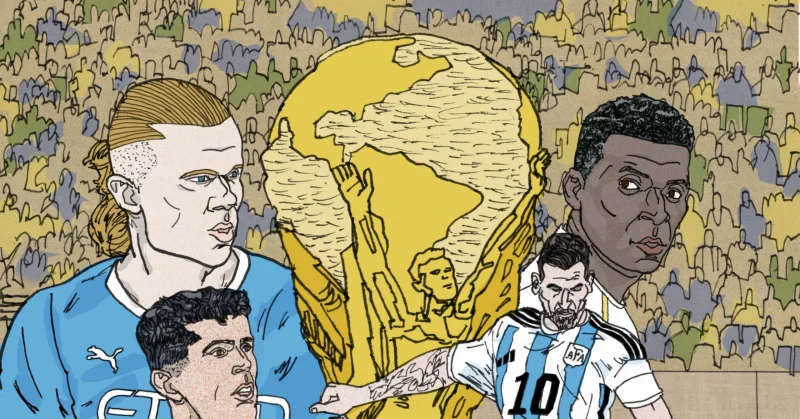
FIFA has expanded the World Cup from 32 teams to 48, turning this summer’s tournament into the biggest in history. The new field will be split across three countries in North America, and it changes the scale of qualification as well as the group stage that opens the competition.
That is why the question of how many teams are in the World Cup matters now. The answer for 2026 is 48, not 32, and the expanded bracket has already reshaped the field before a ball is kicked. Qatar, which failed to win a point in its first World Cup appearance in 2022, is back in the expanded tournament after securing a place this time. Its squad is valued at $19.93 million by Transfermarkt, and it was drawn into what the writer rated the weakest of the 12 groups, alongside teams that sit far higher in other rankings, including Germany and Ecuador.
The expansion also creates room for stories that would not have fit the old format. Curacao, a country of 185,000 people, became the smallest nation ever to qualify for the tournament, and Dick Advocaat, at 78, is set to become the oldest man ever to manage at a World Cup. Those details show why the enlarged event feels different before it starts: more places, more firsts, and more teams arriving with a real chance to reach the stage that matters most to them.
But the bigger field does not guarantee better balance. The 48-team setup gives more countries a seat at the table, yet it also raises the question of how much drama and quality the group stage will actually deliver. Curacao has already been tested in warm-up matches, losing 5-1 to Australia in March and 4-1 to Scotland in May after leading 1-0 late in the first half, a reminder that qualification alone does not flatten the gap between contenders and outsiders.
Qatar’s return carries a different kind of weight. Akram Afif, who won the Golden Boot at the 2024 Asian Cup, heads a side that can point to regional success even as its overall valuation trails the traditional powers. The expanded 2026 World Cup is now set, and the real answer to what the format means will come only when the first group-stage matches begin in North America.
