


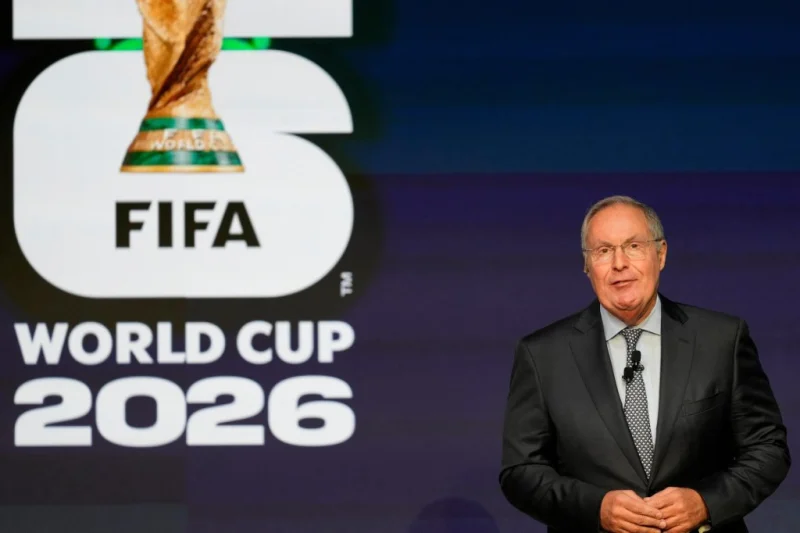
Andrés Cantor is headed to his 12th consecutive FIFA World Cup assignment for Telemundo, keeping one of Spanish-language soccer’s most familiar voices on the network’s biggest stage. The 63-year-old broadcaster will be behind the microphone again on Friday when the United States opens its 2026 World Cup against Paraguay at SoFi Stadium in Inglewood.
For viewers searching his name now, the reason is simple: Cantor is not just returning to the World Cup, he is staying at the center of it. Over the next two weeks, he will call eight group-stage matches, then close the tournament with a third World Cup final for Telemundo on July 19 in East Rutherford, N.J. That assignment extends a run that has made him a fixture of major soccer moments for more than 25 years at the network.
Cantor’s place in U.S. soccer culture was built long before this summer’s schedule was set. He first rose to prominence in the 1990s during his debut stint on television with Univision, where his drawn-out goal call became instantly recognizable to Spanish-speaking fans. His elongated “Gooooooooaaaal” and “Gooooaal!” turned into a signature sound around the sport, and Saturday offered another reminder of how tightly the call is linked to his voice: Antonee Robinson’s volley in a pre-World Cup exhibition match between the U.S. men’s national team and Germany prompted Cantor’s call for 23 seconds, then again for another 15.
Yet Cantor is quick to push back on the idea that the call belongs to him. He says he does not own it, only that he has made it his own, adding that he never claimed to invent anything and only popularized it in the United States. It is a distinction that matters to him, even after decades of being identified with one of soccer’s most famous phrases.
His answer also fits the way he describes the job itself. Cantor says the moment he is on the way to a match, he is happiest, and that he still wakes up eager to call a game wherever it happens to be or in whatever league it is played. That feeling has carried him through a four-decade career that has included National Soccer Hall of Fame recognition, film and television appearances, and the kind of early-morning English Premier League calls that began after NBC Sports acquired U.S. rights in 2013. On some weekends a year, he still rises for 4:30 a.m. wake-up calls to do them.
The bigger question is not whether Cantor will be heard this World Cup. It is how much longer he plans to keep doing this at the highest level, after one more final in East Rutherford and one more month in the middle of the sport’s loudest moments. For now, he is still the man Telemundo turns to when the stakes are highest, and the next time fans hear that long goal call, it will be him again.
