


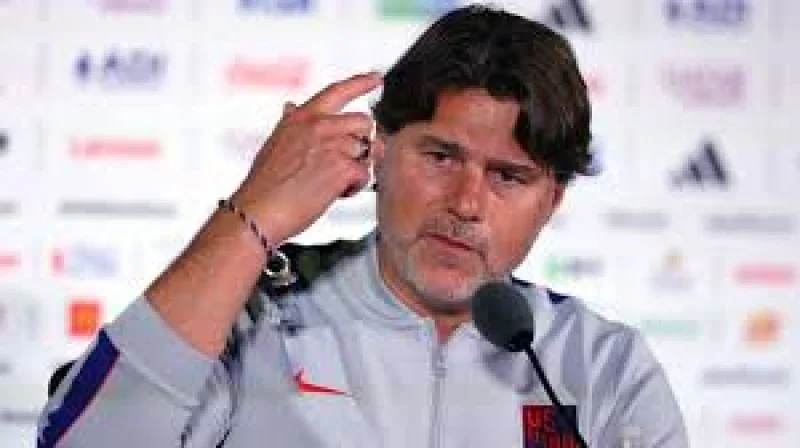
Mauricio Pochettino said the United States can win the World Cup, even as he argued that the country still has “a bit of confusion” in how it understands soccer. The U.S. men’s coach framed the challenge bluntly: the team can dream big, but the country still has not built the same childhood bond with the game that powers traditional winners.
The remarks matter now because the United States is preparing to host the biggest World Cup in history, and because Pochettino is being asked to turn an ambitious program into a genuine contender. When Donald Trump asked whether the team could win it, Pochettino said he replied, “Of course, Mr. President,” adding that a coach should answer with a resounding yes when the country’s chief representative asks the question. He said the team has tried from day one to turn pressure into energy, a message that has followed him through the job and through recent roster decisions such as Chris Richards being ruled out of Germany tune-up as Mauricio Pochettino waits on ankle and Matt Turner being named to Mauricio Pochettino’s 2026 World Cup roster.
Pochettino, 54, from Murphy, Argentina, said the United States has enough people — almost 350 million inhabitants — and enough soccer heritage, including 80 million Latinos with the game in their DNA, to build something far bigger. He said many Americans want faster results, immediate infrastructure and even an instant Messi or Cristiano, but soccer does not work that way. A child, he said, should start using their feet on the ball as soon as they start walking, because that early relationship is what eventually produces the kind of talent seen in Brazil, Argentina, England or Spain.
That is where his warning lands. Pochettino said preparation, mentality, psychology and understanding are already more than covered in the United States. What is missing, he said, is the childhood relationship with the game — and without that, he does not believe the gap can yet be closed. He also said he accepts the “arrogance” of Spain, Argentina, England and France, a confidence built over generations rather than campaigns.
The picture he drew is not flattering, but it is not hopeless either. The United States, he said, is close to a blank page in soccer history, with two decades of disappointment behind it and a tense political atmosphere around the team as the country heads toward 2026. If his belief is right, the next task is not proving that America can want a World Cup. It is showing that the country can raise players who have lived the game long enough to believe they belong there.
