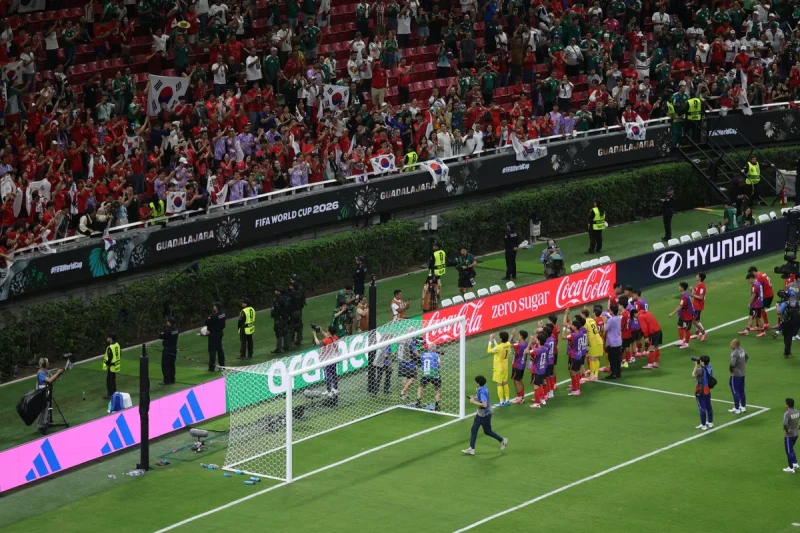
FIFA defended its attendance figures on Friday after thousands of empty seats were visible at Estadio Akron during South Korea’s 2-1 win over the Czech Republic in Guadalajara, one of the tournament’s earliest matches. The governing body said its numbers were based on scanned tickets and verified stadium data, not what television cameras or spectators could see from the stands.
The match had started with Ladislav Krejci putting the Czech Republic in front before Hwang In Beom equalised and Oh Hyeon Gyu completed the comeback. For most viewers, though, the result was followed by a second image that was harder to ignore: swathes of empty red seats in a stadium that FIFA was counting as full enough to publish an official attendance total.
A FIFA spokesperson said official attendance figures reflect the number of tickets scanned and spectators present within the stadium footprint, rather than visual assessments of seating occupancy at any given moment, and added that several ticketed fans could be seen standing in concourses rather than staying in their assigned seats throughout the match. The statement was meant to draw a line between a paper count and what was unfolding inside the ground.
The response lands against a wider fight over World Cup ticketing. FIFA has cut prices for some of its 104 matches in recent weeks, yet about 180,000 tickets were still listed across its official resale portals before the tournament began. The cheapest standard seat for the final was reported at $5,785, with some tickets priced in five figures, even as FIFA said it had received more than 500 million booking requests. That gap between official demand and visible turnout has fed criticism that the system is too opaque for ordinary fans to navigate.
Those complaints have already moved beyond the stadium. Politicians in New York and New Jersey have launched a formal investigation after allegations that fans were left confused by FIFA over inflated ticket prices, with the main objections focusing on unclear waiting times in online queues and the eventual price buyers would face if they got through. The Guadalajara match was only the second of the tournament, so the empty seats arrived early enough to shape the conversation before the event had settled into its rhythm.
FIFA’s position is clear enough: the attendance figure is a scanned-ticket count, and the official line is that the data are verified with stadium and ticketing teams. What remains unresolved is whether that definition will satisfy fans who judge a world cup match by what they can actually see when the whistle goes. For now, the empty seats in Guadalajara have become part of the story the numbers were supposed to settle.