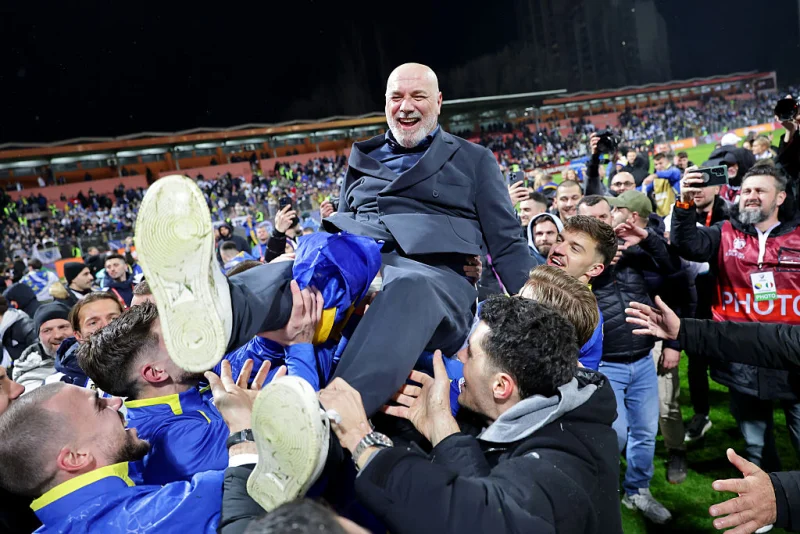
Sergej Barbarez walked into the biggest job of his life in April 2024 with no previous managerial record and a reputation built as much on cards as on goals. Bosnia-Herzegovina hired the 54-year-old as national team manager, putting a former captain and one-time professional poker player in charge just as the country prepared to return to the World Cup stage.
That return mattered on Friday, when Bosnia-Herzegovina played its first group-stage World Cup game. For a team that had waited 12 years to get back after its only previous qualification in 2014, the appointment of Barbarez gave this campaign a face fans already knew: a hard-edged former striker who scored 105 goals in 377 Bundesliga appearances and wore the captain’s armband for Bosnia-Herzegovina from 2004 to 2006.
Barbarez had spent 14 years as a professional player before retiring in 2008, then obtained his coaching license a few years later. His record at the poker table was modest but real: Cardplayer.com lists $143,628 in winnings across 26 games between 2010 and 2022, with two final-table appearances and no tournament victories. It is an unusual route to a national team job, but Bosnia-Herzegovina did not hire him for convention. It hired him for presence.
That presence came with baggage. Barbarez had been one of the loudest critics of the Football Association of Bosnia and Herzegovina’s decisions before the same body brought him in. He stayed public about those disagreements even after Vico Zeljkovic became association president in 2021, a period that also brought a rapid turnover of managers after the team failed to qualify for Euro 2024. Fans had already been angered by the federation’s 2022 decision to schedule friendlies with Russia after Moscow invaded Ukraine and was banned from FIFA and UEFA competition.
Barbarez did not soften once he was hired. He accused Brondby manager and Welshman Steve Cooper of dropping Bosnian midfielder Benjamin Tahirovic to help Wales’s World Cup bid, then told a news conference, “I don’t think I should apologize for anything.” Bosnia-Herzegovina backed a manager who had spent years attacking the system from the outside, then asked him to lead the side through it from inside.
He said in April 2024 that his target was not merely this tournament but qualification for Euro 2028, and that he wanted players to feel proud when they wore the national team shirt. Friday’s opening group game was the first test of whether that message can carry beyond the noise around his appointment. Bosnia-Herzegovina’s supporters know the story now. The question is whether Barbarez can turn a famous name, a clean message and a messy breakup with the federation into results once the group stage starts to bite.