


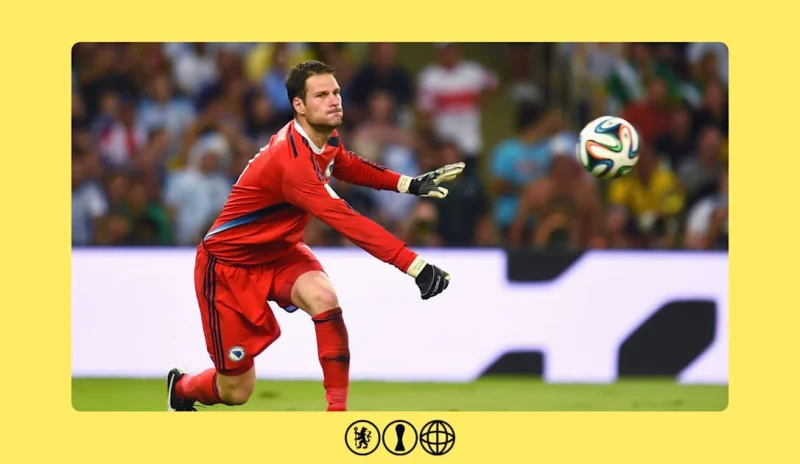
Asmir Begovic says Canada’s football scene has been transformed from a place where the game was mostly for fun into one with real professional pathways, organized coaching and a domestic league structure that did not exist when he was growing up there. The veteran goalkeeper, born in Bosnia and Herzegovina and raised in part in Edmonton before leaving Canada at 16, is looking at a country preparing for its third World Cup with a perspective shaped by both distance and memory.
That is why his comments landed now. Canada is getting ready for a third World Cup after appearances in 1986 and 2022, and Begovic, now with Leicester City, has been watching the change from afar while thinking back to the place he left as a teenager to join Portsmouth. He said the gap between then and now is a “night and day transformation,” pointing to more coaches, better organization, professional clubs in MLS and the Canadian Premier League as proof that the pathway for young players is no longer an afterthought.
Begovic’s own route gives that assessment weight. He first moved to Germany as a young child after the Balkan Wars forced his family to flee, and he began learning goalkeeping under his father there before later settling in Edmonton when he was ten. By the time he left Canada at 16, football in the country was still a side pursuit for most players. Since then, he has built a career in England that included 31 appearances for Chelsea across two seasons between 2015 and 2017, a Premier League title in the 2016-17 campaign, and spells with Stoke, Bournemouth and QPR, where he even scored a Premier League goal for Stoke.
What makes Begovic different from a standard pundit is that he has lived the contradiction he is describing. He says he has not been to Canada much since leaving, yet he keeps up with the sport there closely enough to see how far it has come. The same is true of Bosnia and Herzegovina, where he remembers a country of around three million people qualifying for the 2014 World Cup with a 1-0 win away to Lithuania in 2013, a moment he called priceless because it was the nation’s first major tournament.
He played in all three of Bosnia and Herzegovina’s matches in Brazil in 2014, carrying the hope of a team built from players who, in his words, had been displaced children during the wars and came together for one common goal. Bosnia is preparing for a second World Cup now, and for Begovic the emotion still starts with family: he said football is the country’s number one sport, and that his parents, aunts, uncles, cousins and grandparents all live and breathe for the national team. That mix of exile, return and pride is what gives his story its force, and it leaves the same question hanging over Canada’s progress now: how much farther can the game go before the next generation takes the field on a bigger stage?
