


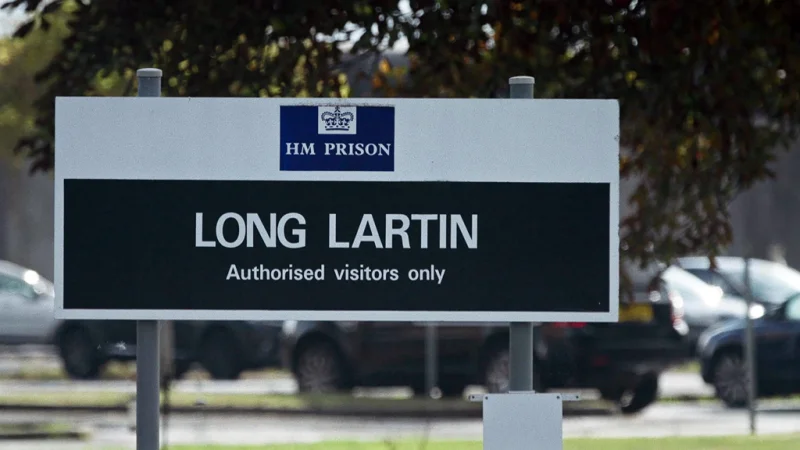
Violence remains prevalent at HMP Long Lartin after inspectors returned and found prisoners still living with unsafe conditions, poor self-harm support and serious gaps in daily living standards. The follow-up inspection, carried out between 23 February and 5 March, also found that four more prisoners had taken their own lives since the last inspection.
That finding lands now because the prison had already been told to improve safety and conditions, and the latest report shows the gap between progress and results is still wide. Inspectors identified fifteen key concerns, with five treated as priorities, and said too many prisoners still felt unsafe inside the Worcestershire jail.
Charlie Taylor said the prison was making progress, but not enough had changed to improve the scores in any of the tests. He said the jail was well led, yet outcomes for prisoners had not improved enough. That judgment matters because the inspection was not a routine visit. It was an announced follow-up, designed to check whether earlier warnings had been acted on.
The details show why the concerns have not gone away. Assaults had fallen since the last inspection in 2024, but the rate of violence was still higher than at similar prisons. Self-harm remained high as well. Leaders were told they had not done enough to understand what was driving the violence, while support for prisoners in crisis was described as poor. Many staff were also said to fail to engage positively with inmates, and minority ethnic prisoners reported especially poor relationships with officers.
The prison near Evesham holds some of the most dangerous men in the country, most of them serving long or determinate sentences. That makes the basic failures more serious. Inspectors said the prison had reduced the supply of illicit drugs and there had been a steep drop in positive drug tests, but that did not translate into a safer wing. Prisoners were still spending too much time locked in cells, with limited access to meaningful activity, and attendance at workshops was poor.
Living conditions remained part of the problem. An unhygienic night sanitation system was still in use on older wings, and many cells lacked heating or hot water. The gym and library were praised for offering enrichment opportunities, and a tutor was providing in-cell education, including to inmates who were segregated. But inspectors warned that the serious issues would not be fixed without substantial and sustained investment, and they gave no timetable for when that might come.
The prison had set clear standards for improvement, and inspectors saw evidence of greater stability. Morale, though, was low and shortages of experienced officers had weakened delivery. That leaves HMP Long Lartin in a familiar but uncomfortable place: better led than before, but still not safe enough for the men inside it.
What happens next is not a fresh inspection date but a harder question about delivery. The report has made clear that progress is real, yet not enough. Unless the prison finds a way to address violence, self-harm, sanitation, heating and staffing together, the next update is likely to sound uncomfortably familiar.
