


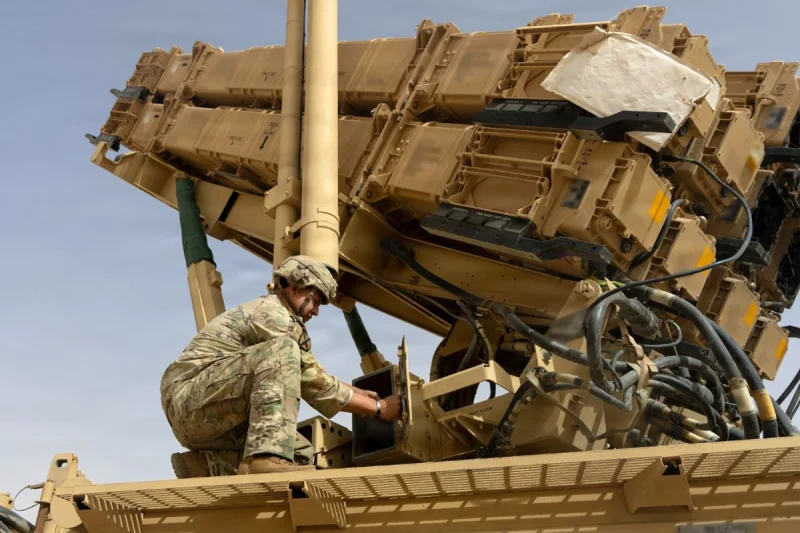
Lockheed Martin said it cannot guarantee when US allies will get Patriot PAC-3 interceptor missiles, even as it prepares to lift annual production to 2,000 by 2033 under a $4.7 billion contract with the Pentagon. The warning from company executive Brian Dunn came at the ILA Berlin Air Show and underlined a problem that has become more urgent for governments waiting on air-defense stock.
Olha Stefanishyna, Ukraine’s deputy prime minister for European and Euro-Atlantic integration, has said Kyiv is ready to help finance additional Patriot systems if Washington agrees to provide them. That interest lands at a moment when the Patriot missile, the PAC-3 interceptor, is one of the few weapons able to help defend against ballistic and cruise missiles — and when allies are searching for signs that promised supply increases will translate into actual deliveries.
Dunn was blunt about how little control Lockheed Martin has over where the next missiles go. “We do not control what the allocation of those missiles is going to be. We can’t tell anybody where you’re going to be on that [priority list],” he said. He added that delivery timing remains uncertain for Germany, Japan, Poland, the UAE and Saudi Arabia, while US officials have warned allies, including the UK and Baltic states, that they may face longer waits.
The company’s production target is substantial. Lockheed plans to expand PAC-3 output from about 650 missiles a year to 2,000 by 2033, a ramp-up meant to ease pressure on a supply chain strained by demand from multiple regions at once. Paula Hartley said international partners are growing frustrated by the delays and the lack of clarity around deliveries, a complaint that has followed repeated appeals from governments that rely on Patriot batteries to defend critical sites.
Ukraine has the most immediate stake in the bottleneck. Kyiv depends on Patriot systems to counter ballistic missile threats and has warned of critical gaps in air defense amid continued Russian strikes and shortages of interceptor missiles. Oleksandr Syrsky has said Ukraine lacks enough modern air-defense systems and must use what it has more efficiently while still seeking more Western support. Volodymyr Zelensky has kept pressing for more Patriot PAC-3 missiles and systems, turning the backlog into a battlefield issue rather than a procurement one.
The broader problem is no longer just manufacturing. European allies have already complained about long delivery times for US weapons after stockpiles were depleted by recent conflicts, and the squeeze has been intensified by a global supply crunch tied to several active wars, including the war in Iran. Lockheed’s pledge to make more PAC-3 missiles is important, but for the countries waiting in line, the unresolved question is not whether output rises. It is which ally gets the next missile first.
