


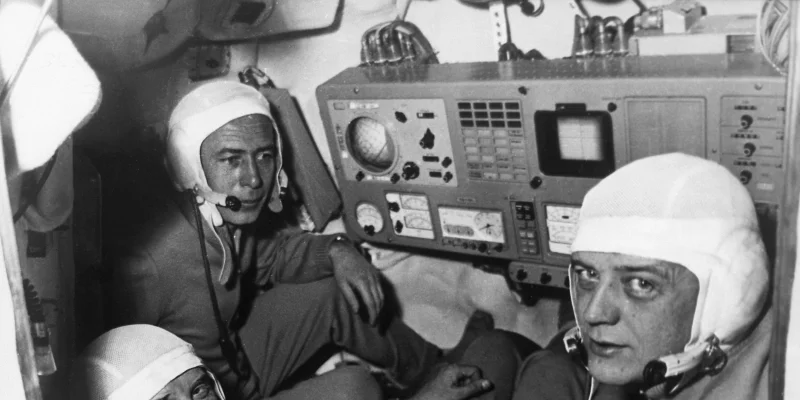
In 1971, Soyuz 11 came back to Earth with its entire crew dead, turning what had been described as a successful mission into one of spaceflight’s darkest reversals. The crew on board — Georgi Dobrovolsky, Vladislav Volkov and Viktor Patsayev — had just achieved several firsts at Salyut 1 before the spacecraft landed and the loss became known.
People still search Soyuz because the mission sits at the intersection of ambition and tragedy. The Soviet Union had launched Salyut 1 on April 19, 1971, as the world’s first space station, and Soyuz 11 was meant to carry the next crew to board it after Soyuz 10 was blocked by a mechanical issue. For a brief moment, the flight seemed to deliver on that promise.
That is why Valeri Kubasov remains tied to the story even though he never flew it. He was originally slated to go alongside Alexei Leonov and Pyotr Kolodin, but a pre-mission medical exam found a swelling in his lung and doctors suspected tuberculosis. The whole original crew was removed, and Dobrovolsky, Volkov and Patsayev were named as backups and sent instead. The substitution mattered because Soyuz 11 became the first, and to date only, time men died in space.
The cruelest part of the mission is that its public face was success. The crew had accomplished the work they were sent to do at Salyut 1, and Volkov even left behind a line that has outlived the flight itself: “We’ll meet tomorrow, get the cognac ready.” The words land differently now, because the spacecraft’s return ended not in celebration but in silence.
What happened next in the larger history of the Space Race came years later, in July 1975, with the Apollo-Soyuz Test Project, the first international space mission. That later handshake in orbit became a symbol of thaw, but Soyuz 11 remained the reminder that the cost of reaching first can be measured in lives.
