


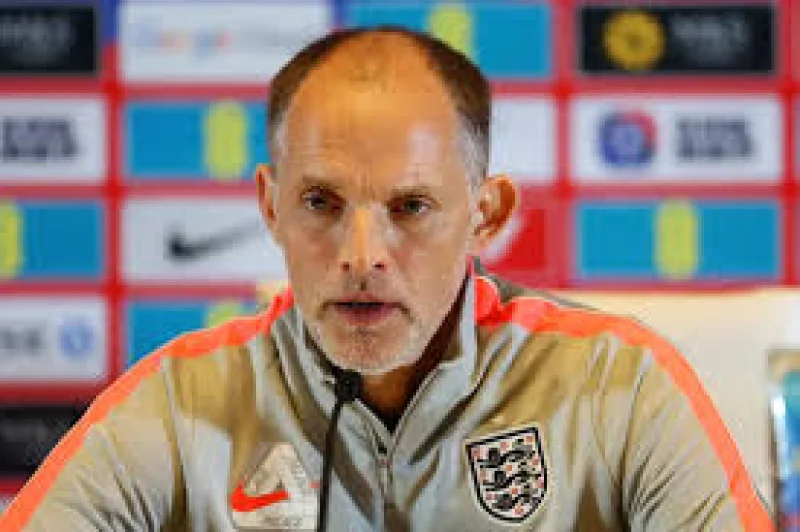
Thomas Tuchel is now the man England have placed at the center of their World Cup hopes, and the 52-year-old is chasing a piece of history no foreign coach has managed before: winning the tournament with England.
That is why an england match today carries more than the usual weight. Tuchel is not just filling a dugout; he is carrying a team into a campaign that will be judged on the biggest prize in the game, with supporters already measuring him against the long list of managers who have tried and failed before him.
Almost 30 years ago, while Glenn Hoddle’s England were beginning their World Cup campaign in France in 1998, Tuchel was working a student job at a bar in Stuttgart and turning up at wild parties in the same city. He was still outside the game he would one day come to shape from the touchline. His route into coaching began only after a period when he came close to giving up football altogether.
Ralf Rangnick saw something in that detour. He later recalled that he could hardly believe Tuchel was earning a living in a Stuttgart bar, called him up and asked what he was doing, then told him to come to Stuttgart and work as a youth-team coach. Rangnick brought him together with the academy director, and that meeting became the start of Tuchel’s coaching career. It was a natural connection between two men who had long admired each other, and between a young coach and the older figure who had been laying the groundwork for a tactical revolution in German football at SSV Ulm in the early 1990s.
That influence ran deep. Rangnick was one of the first managers to introduce zonal marking, and Tuchel has said he changed the way he watched football on television. Tuchel had played under Rangnick at SSV Ulm, but injury ended his playing career early. Damage to the cartilage in his knees caused such severe pain that he could barely walk up and down stairs, a physical break that pushed him toward coaching just as much as Rangnick’s call did.
There is the promise and the problem in one picture. Tuchel has the tactical reputation, the route through German football and the authority that comes from having built his career the hard way. But England have heard this before: many others have been asked to deliver the World Cup and left without the trophy, Glenn Hoddle among them. Tuchel now carries that same demand with a foreign accent.
What happens next will be judged match by match, and then on whether England’s run ends with the one result that would change Tuchel’s place in the game. If he does what so many before him could not, the bar in Stuttgart will feel like a very long way away.
