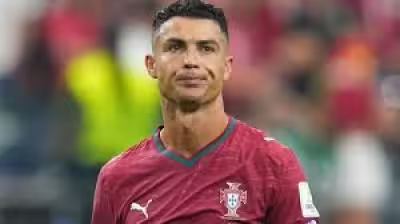
Volodymyr Zelensky set off a new fight with Poland on May 26 when he signed a decree giving an elite Ukrainian special forces unit the honourary title of “Heroes of the Ukrainian Insurgent Army.” The move immediately drew anger in Warsaw, where the name of the UPA still carries the weight of wartime slaughter.
Lech Walesa moved first and did it in public, saying on social media that he had wrenched the Ukrainian flag badge from his chest after hearing of the decree. His reaction captured how quickly a ceremonial honor in Kyiv turned into a political rupture across the border, with Polish critics treating the gesture not as a tribute to soldiers but as a statement about memory, blame and national identity.
The backlash landed because the UPA is not a neutral historical reference in Poland. It was the armed wing of the far-right Organisation of Ukrainian Nationalists, and Polish historians tie it to massacres of ethnic Poles and Jews in Volhynia and eastern Galicia during World War II, killings that claimed tens of thousands of civilians. The Polish state considers those killings part of a deliberate campaign of genocide, which is why a name honored in Kyiv can sound like an insult in Warsaw.
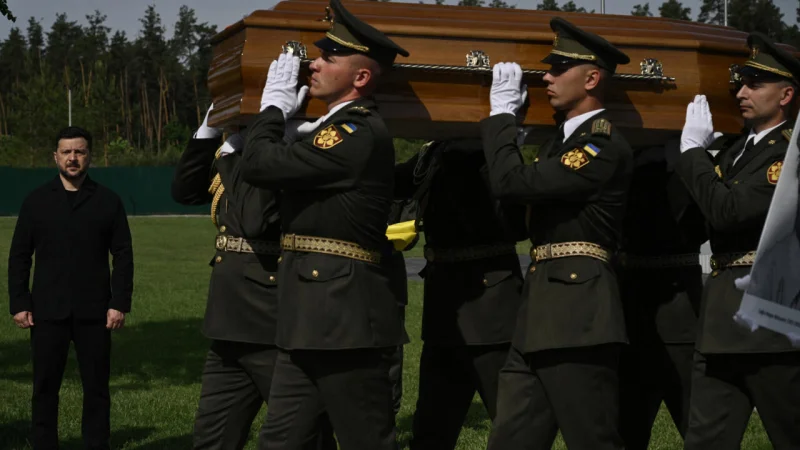
The timing made the dispute even sharper. A day before the decree, Zelensky presided over the reburial near Kyiv of Andriy Melnyk, who died in Germany in 1964 after leading a branch of the OUN and promoting collaboration between the Ukrainian nationalist movement and Nazi Germany and its fascist allies. To Polish eyes, the two moves formed a pattern: a modern wartime president embracing figures and symbols that sit close to some of the darkest chapters of the region’s history.
Leszek Miller said the decree was akin to Germany renaming a military unit after the Nazis’ Einsatzgruppen death squads. Karol Nawrocki went further, calling for Zelensky to be stripped of Poland’s highest state honour, the Order of the White Eagle, and warning that glorifying the UPA had handed Russian propaganda plenty of fuel for disinformation. That charge matters because Vladimir Putin has spent years trying to justify Russia’s assault on Ukraine as a campaign to “de-Nazify” the country, and every row over wartime memory gives him fresh material.
The dispute now hangs over relations between Kyiv and Warsaw at a moment when Ukraine still depends on Polish backing in the four-year struggle against the Russian invasion. Zelensky has previously spoken proudly of his own grandfather’s fight against the genocidal Nazi regime in the ranks of the Red Army, but that history has not softened the shock in Poland over this decree. What happens next is still unclear, and that uncertainty is itself the story: neither side has yet shown a clear way to step back from a wound that history keeps reopening.