


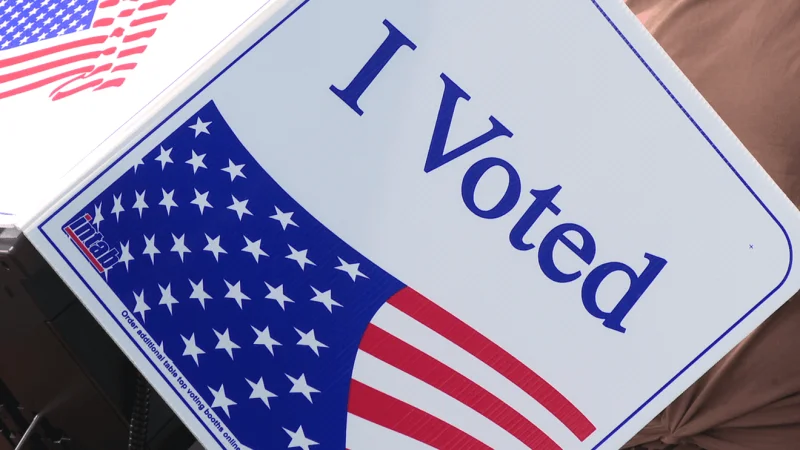
South Carolina voters went to the polls Tuesday to choose nominees for governor and other offices, setting up a direct test of Donald Trump’s hold on the state’s Republican electorate. The ballot will also help decide whether several high-profile races head to a June 23 runoff.
That is why the south carolina primary results are being watched so closely: the winner of each race must clear 50% to avoid a runoff, and the contests include the open governor’s race, U.S. Senate and the 1st Congressional District. Seven Republicans and three Democrats are vying to succeed Republican Gov. Henry McMaster, who is term-limited after 10 years in office.
Trump has already weighed in on the governor’s contest, backing Lt. Gov. Pamela Evette. The endorsement is highly sought after in South Carolina, where Trump carried the state in three presidential campaigns with at least 55% of the vote. But the backing is not a guarantee. U.S. Rep. Nancy Mace still touts a past Trump endorsement on her campaign website, while U.S. Rep. Ralph Norman and state Attorney General Alan Wilson are also in the Republican field.

The Democratic candidates for governor are state Rep. Jermaine Johnson, attorney Mullins McLeod and businessman Billy Webster. In the Senate race, Lindsey Graham is seeking a fifth term against five Republican primary challengers and a Democratic field that includes Annie Andrews. Graham had spent more than $29 million on his reelection bid as of May 20 and still had about $4.2 million in the bank, giving him more money than any of his primary rivals as the campaign entered its final stretch.
The race for Graham matters beyond Tuesday because South Carolina is expected to remain a critical stop in future first-in-the-South presidential primaries. The state’s congressional map has also been shaped by a Trump-backed redistricting fight, after the Republican-controlled state Senate rejected a mid-decade plan aimed at eliminating the state’s sole Democratic-held seat. For now, none of South Carolina’s seven congressional seats is expected to be especially competitive in November, which leaves the primary as the main battleground.
If no candidate wins a majority on Tuesday, the top two vote-getters will meet again in a June 23 runoff. In a state where the most populous counties — Greenville, Horry, Charleston, Richland and Spartanburg — often help determine the outcome, the question is not just who has Trump’s support, but who can turn it into enough votes to survive the first round.
