The federal government has issued its primary strategies for the Upper and Lower Colorado basins, putting Doug Burgum’s Interior Department on a direct course toward interstate litigation over how the river will be managed after 2026.
The move matters now because the next federal deadline arrives on Oct. 1, 2026, and the basin states are already preparing for legal and policy shifts that could redraw how water is shared from Lake Mead to the rest of the system. The Lower Basin — California, Arizona and Nevada — and the Upper Basin — Colorado, New Mexico, Utah and Wyoming — are no longer talking only about drought planning. They are positioning for court.
Under the Interior Department’s fast-tracked environmental review timeline, the public comment window on the draft environmental impact statement closed on March 2, 2026, and the agency has now moved ahead with its main strategies for both basins. The approach has sharpened the stakes for states that depend on the Colorado River for cities, farms and hydropower, while leaving them to guess how much federal control Washington intends to assert over a compact that has governed the river for generations.
The legal fault line is already clear. The Lower Basin says cutting Lake Powell releases would violate the 1922 Compact. The Upper Basin has argued that federal officials lack statutory authority to override the compact or dictate state water cuts. That dispute is what turns a water-planning exercise into a likely courtroom fight, with California and Arizona already under District Court Ten and the basin states moving toward arguments that could reach the Supreme Court in October 2026.
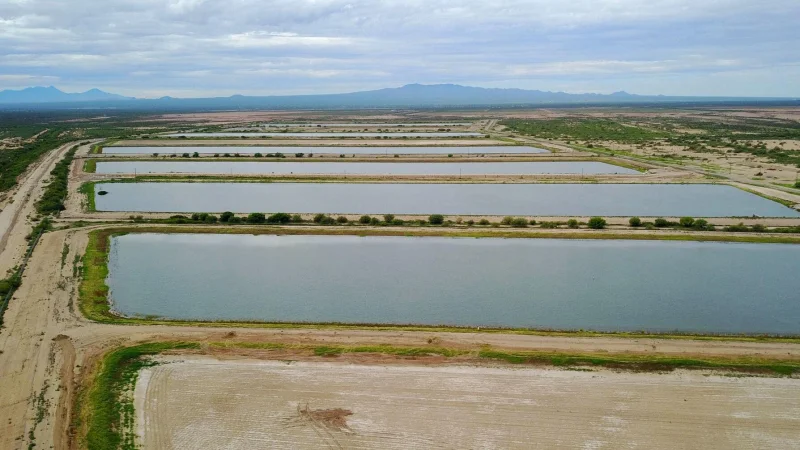
The pressure behind the fight is not abstract. Continued drought, population growth and agricultural demand are all forcing states to confront how much longer the current system can hold. The federal strategies could significantly change water allocations and management practices, which is why utilities and state negotiators are treating the 2026 deadline as more than a paperwork date. In Arizona, Tucson Water has stored Colorado River water in basins in the Avra Valley north of Tucson since the early 2000s, and Tucson and Phoenix are starting the Secure Water Arizona Program, under which cities with extra water now could supply it over short or long periods to places that need it later.
For now, the question is not whether the basin states will fight. It is which version of the Colorado River the federal government will try to lock in before Oct. 1, 2026, and whether that plan survives the first serious challenge in court.