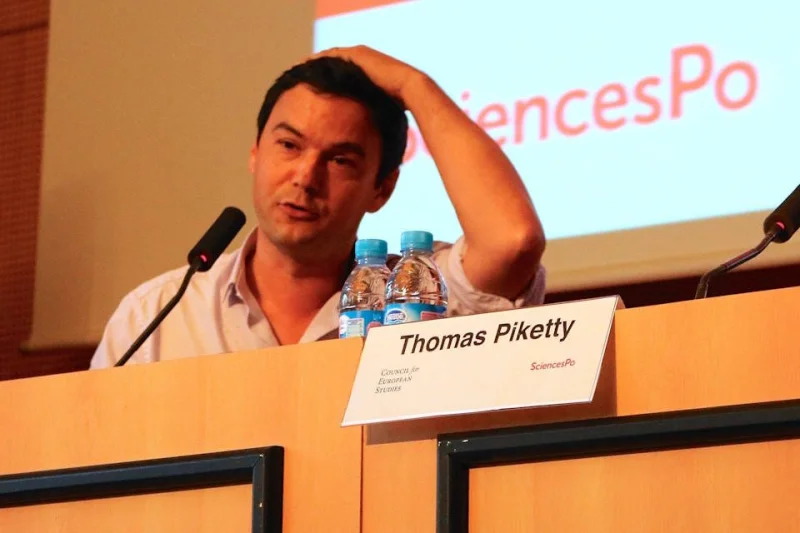
A new Global Justice Report is pushing the debate over wealth tax from the margins into the climate fight, arguing that taxing extreme riches could help finance public services and still keep global heating within a 2C rise. Produced by Thomas Piketty’s World Inequality Lab, the report pairs redistribution with a hard ecological limit: raise living standards, it says, but not through endless private consumption.
The timing explains why the report is drawing attention now. It lands as inequality hardens, climate politics stays cautious and billionaire-backed backlash shapes the public argument in rich countries. The report’s answer is blunt. Humanity can deliver what it calls “a good life for most people” only if the world shifts away from the consumption patterns of the wealthy few and toward broader public provision, downtime and sufficiency.
The numbers are meant to make that case concrete. The report says every country should reach today’s rich-country level of €5,000 per person per month in purchasing-power terms, while the figure for sub-Saharan Africa is just €290. That gap, the authors argue, is not a reason to lower expectations for poorer countries. It is a reason to change the model that allocates resources now. The report says taxes on the very rich could build the public realm, while a Keynesian clearing union and a new international currency would ease the external constraints that keep poorer states from spending more at home.
Thomas Piketty’s World Inequality Lab puts the ideological stakes as plainly as the economics. It describes the goal as “sufficiency,” not oligarchic excess, and says rich-world levels of high private consumption cannot be extended to everyone within a carbon budget compatible with a 2C rise. That leaves the report defending a new bargain: more public goods, more equality and less private luxury at the top. The friction is obvious. Critics will call it utopian, and the political resistance to taxing extreme wealth, reworking global finance and telling richer societies to consume less would be enormous.
Even so, the report argues that change is still possible through trade unions, citizen movements and coalitions of countries, not just governments acting alone. It frames decarbonisation, sufficiency and equality as compatible with a decent life for most people, while warning that plutocracy, US power and timid climate politics are blocking progress. The unanswered question is not whether the diagnosis is ambitious. It is whether any government, or enough of them together, is prepared to turn a wealth tax and a new international financial order into law.