


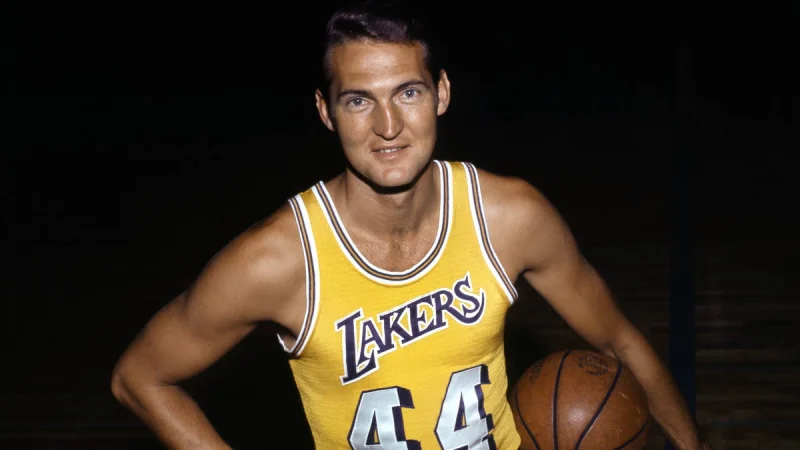
The Lakers history file on Jerry West is bigger than a jersey number. It stretches across 14 seasons as a player, then into the front office, where he helped build championship teams long after his playing days ended.
That is why his name still draws attention in a Lakers 80th-season jersey history series focused on players who wore No. 44. West entered the league as the No. 2 pick in the 1960 NBA Draft out of West Virginia University and spent his entire career with Los Angeles, a run that made him one of the franchise’s defining figures.
West’s numbers explain the scale. He averaged 27 points, 5.8 rebounds and 6.7 assists, ranked seventh all-time in regular-season scoring average and fifth in playoff scoring average, and was one of the rare players to lead the league in both scoring and assists average at different points in his career. He reached the NBA Finals nine times and lost eight of them, including four Game 7s, with six of those defeats coming against Bill Russell’s Celtics.
One of those losses became part of NBA lore. In 1969, the Lakers fell to Boston after Wilt Chamberlain joined West and Elgin Baylor, yet West was named Finals MVP anyway, the first and only player from the losing team to win the award. For a player built around competitive pain, it was a strange kind of recognition — a trophy for excellence in a series his team did not finish.
The broader Lakers legacy is harder to separate from the player himself. West retired in 1974, then spent three years as the team’s head coach before returning as general manager in 1982. In that role, he helped shape the Showtime era into a dynasty and later brought in Shaquille O’Neal and Kobe Bryant in the summer of 1996, moves that changed the franchise again. He resigned from the Lakers’ front office in 2000, but his imprint remained on the roster architecture long after he left.
The one part of West’s story that still feels unresolved is the human one. He went on to win the 1972 championship as a Laker and later added three more rings as an executive, but the record does not fully capture what it cost him to live through so many near-misses before that. West died in 2024 at 86, and the Lakers’ history now reads with him in every chapter: star, coach, architect and the rare figure whose legacy was built as much by losses as by titles.
