


Apitegromab helped people taking tirzepatide for weight loss hold on to more lean mass in a 24-week phase 2 trial, even though the amount of weight they lost was similar to those given placebo. The randomized study, published in Nature Medicine, found that the drug was linked with 55% greater retention of lean mass.
The result is drawing attention now because GLP-1-based injections such as Wegovy and Mounjaro have transformed weight-loss care, while also raising concern that part of the weight they take off comes from muscle and other non-fat tissue. Studies suggest that 25% to 40% of total weight loss from these drugs may be lean body mass, a loss that can matter for strength and health.
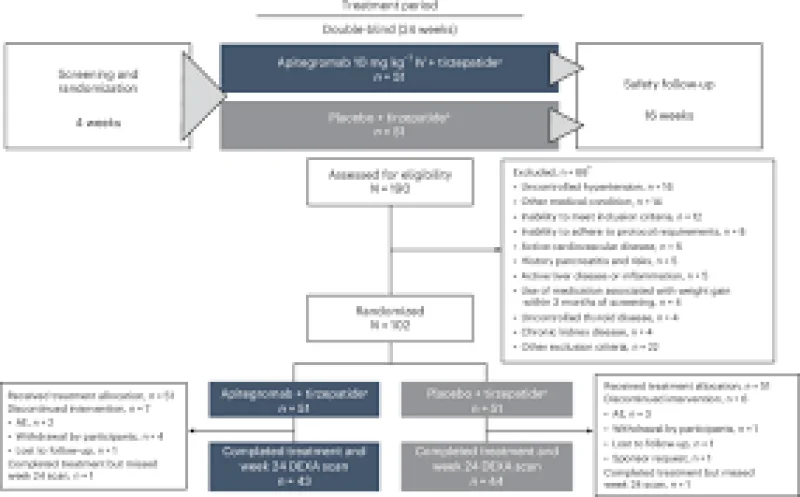
The trial enrolled 102 participants, with 51 receiving apitegromab alongside tirzepatide and 51 receiving placebo with tirzepatide. By the end of 24 weeks, the apitegromab group had lost an average of 1.6kg of lean mass, equal to 14.6% of total weight loss, compared with 3.5kg in the placebo group. Apitegromab works by blocking myostatin, a protein that helps inhibit muscle growth.
Prof Alexander Miras said lean-body-mass loss can leave people less able to lift heavy weights or walk up a hill. He said the new medicine may help reduce the effect of GLP-1-based drugs on muscle strength and improve functionality further than tirzepatide alone. That is the promise, but it is not yet proof that patients will actually move better, feel stronger or stay healthier.
Prof Naveed Sattar said the findings from this early-stage trial suggest that novel drugs can help curb muscle mass loss with prescribed tirzepatide, but he said larger, longer studies are needed to check safety. The study was funded by Scholar Rock, the producer of apitegromab, and most participants were women, which limits how far the results can be stretched. Side-effects were similar in both groups and were mostly mild.
For now, the study points to a possible way of making weight-loss injections more selective, trimming fat without giving up as much lean tissue. What it does not yet show is whether preserving that lean mass will translate into better strength, mobility or day-to-day function once treatment goes beyond 24 weeks.
