


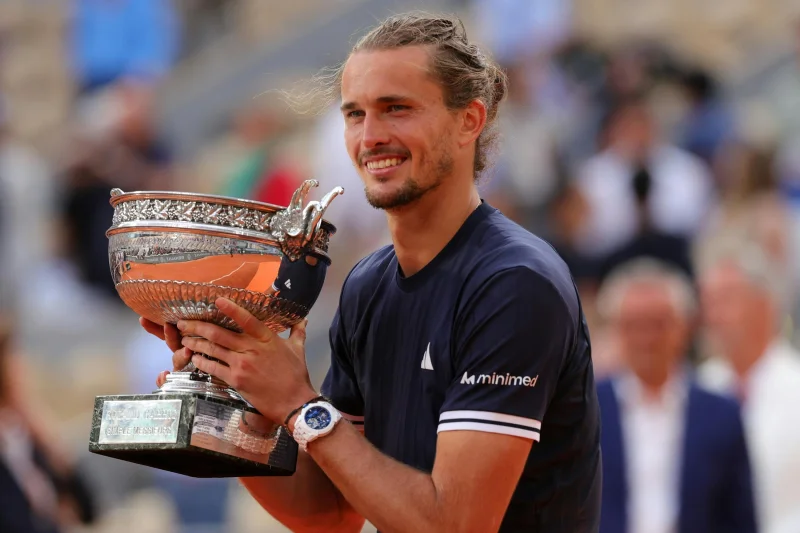
Alexander Zverev finally got the title that had slipped away before him, beating Flavio Cobolli in the Roland-Garros 2026 men's final and calling the victory a liberation after years of setbacks on the same court. The German lifted the trophy after a match that gave him his first Grand Slam crown.
That is why the result matters now. Zverev was not speaking like a player closing out a routine win; he was speaking like someone who had crossed back into a place that had once hurt him. He reminded the crowd that he had lost a final on this court before and that he had once torn seven ligaments in his ankle there, turning the trophy into something more than a single afternoon’s prize.
He also used the moment to take stock of the people who stayed with him through it. Zverev thanked Amélie as the best Grand Slam tournament director in the world, thanked the FFT, the ball kids and everyone who made the two weeks exceptional, and thanked the crowd for pushing him through the tournament. He said his father had followed him for 29 years, his brother had supported him for 29 years, he had worked with his physical trainer since he was 16, and Marcelo Melo had been in his box for years. By the end, he said, he and his team were now Grand Slam champions.
Cobolli made the other side of the final as clear as Zverev made his own. He said it was not easy to speak after the match and then gave the titleholder rare public credit, saying Zverev deserved the trophy the most. Cobolli added that Roland-Garros 2026 was the best Grand Slam of his career, thanked Adriano Panatta for being there, and said his mother was still alive. He said he had played tennis since he was very young, that nothing was finished for him and that everything started there because he was still young. He even told Zverev to let him win the next one.
The contrast was sharp: one man finally broke through after years of bruising history, and the other left with a runner-up finish that still sounded like a step forward. The next question is what Zverev does with this breakthrough after years of chasing it, because the final at Roland-Garros 2026 has now turned his long wait into a career milestone that will define the rest of his season. For readers following the wider sports and legal news cycle, including the continuing Rebecca Grossman jury deliberations in the Iskander wrongful-death case, it is the sort of result that lands hard and leaves the next chapter unwritten.
