


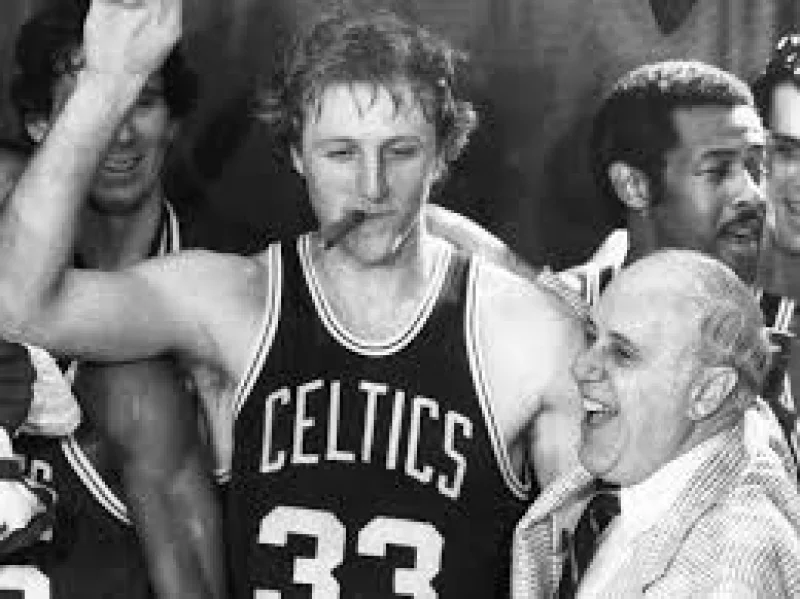
Kevin McHale says Larry Bird would be a “five-alarm fire” in today’s NBA, and he is not leaving much room for debate. In a recent phone call, McHale pushed back on the idea that Bird might not be a superstar in 2026, arguing that the Hall of Famer would punish modern defenders just as quickly now as he did in his own era.
The timing helps explain why the conversation has returned. The NBA Draft begins June 23, and the Celtics hold the 27th and 40th picks, a spot in the order where a league source says the talent pool may be slightly watered down because NIL money has made it more lucrative for many prospects to stay in college. That backdrop has reopened the broader question of how stars from other generations would fit in the modern game, and Bird remains one of the most argued-over names in that debate.
McHale’s defense was blunt. He said current players cannot guard Luka Doncic, then used the Lakers star as the measuring stick for Bird, saying Bird was “bigger, stronger, faster, and meaner than Luka Doncic.” If Doncic is already lighting up modern defenders, McHale argued, Bird would make it look worse. He said Bird would go by defenders “a hell of a lot faster than Luka would go by you,” adding that Bird was a straight-line driver and “also just a horse.”
That is where the friction lives. Some current players question whether Bird would be a superstar in 2026 at all, a skepticism rooted in the usual arguments about pace, space and the way the league now punishes slower-footed stars. McHale’s answer is that Bird would overwhelm the very defenders who are supposed to make today’s NBA harder, not easier.
Bird’s résumé still gives McHale’s argument real weight. From 1979-92, Bird was a 12-time All-Star, a three-time MVP and a three-time NBA champion with the Celtics. Those numbers do not settle the era question, but they do explain why the debate never really dies. McHale, who played alongside Bird long enough to know how he behaved when the pressure rose, summed up his old teammate with a memory that fits the argument as much as the stats do.
Before he became an NBA star, Jamal Gomes said, Bird had the same competitive edge as a kid. “That kid was a winner back when he was 11, 12, 13 years old,” Gomes said, a reminder that the conversation around Bird is not only about skill but about force of personality. The open question is not whether Bird was great. It is whether that kind of force would still break through in a league built to stop exactly that kind of player.
For now, McHale has made his answer clear. He thinks Bird would not merely survive modern basketball. He would turn it into a problem the defenders could not solve.
